

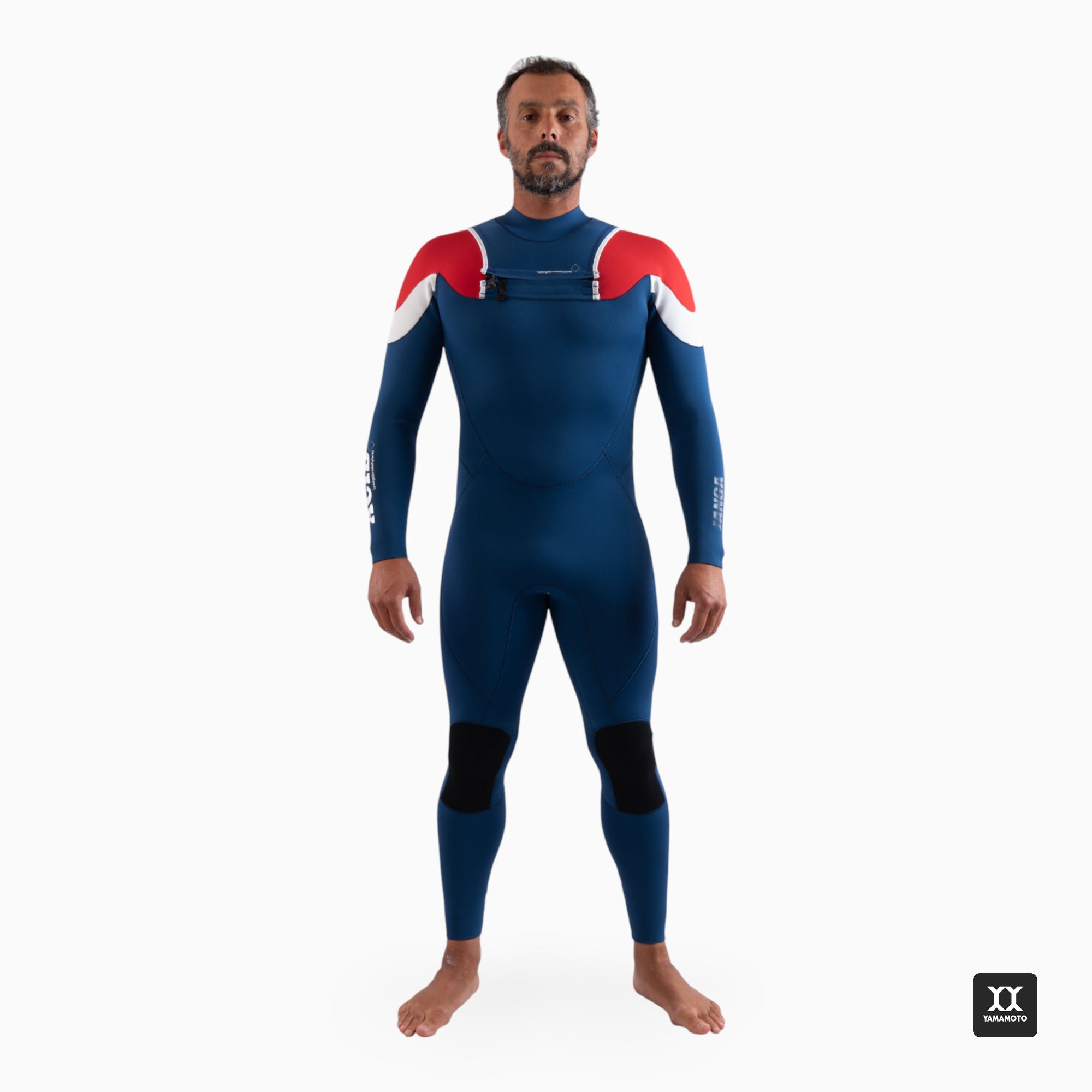
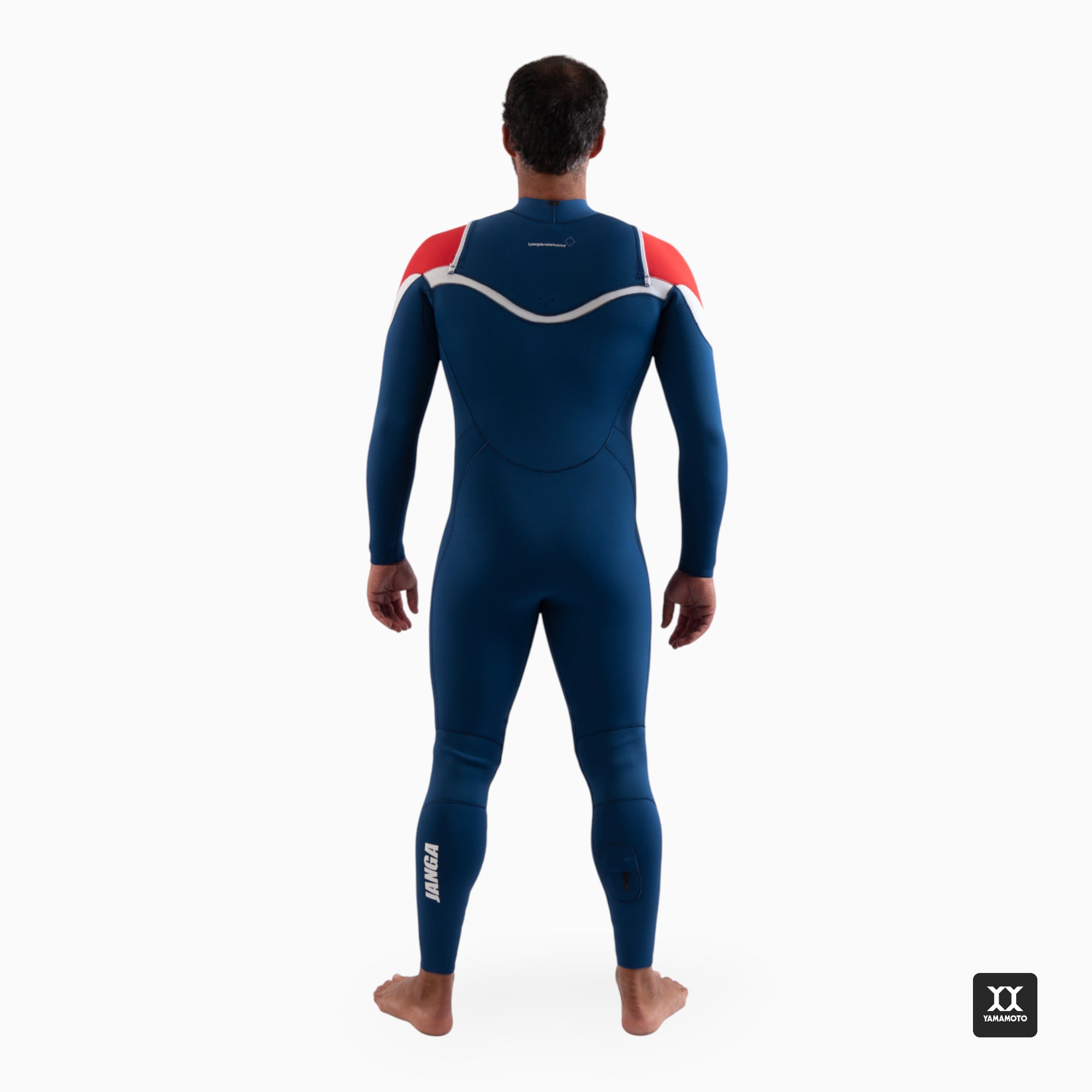
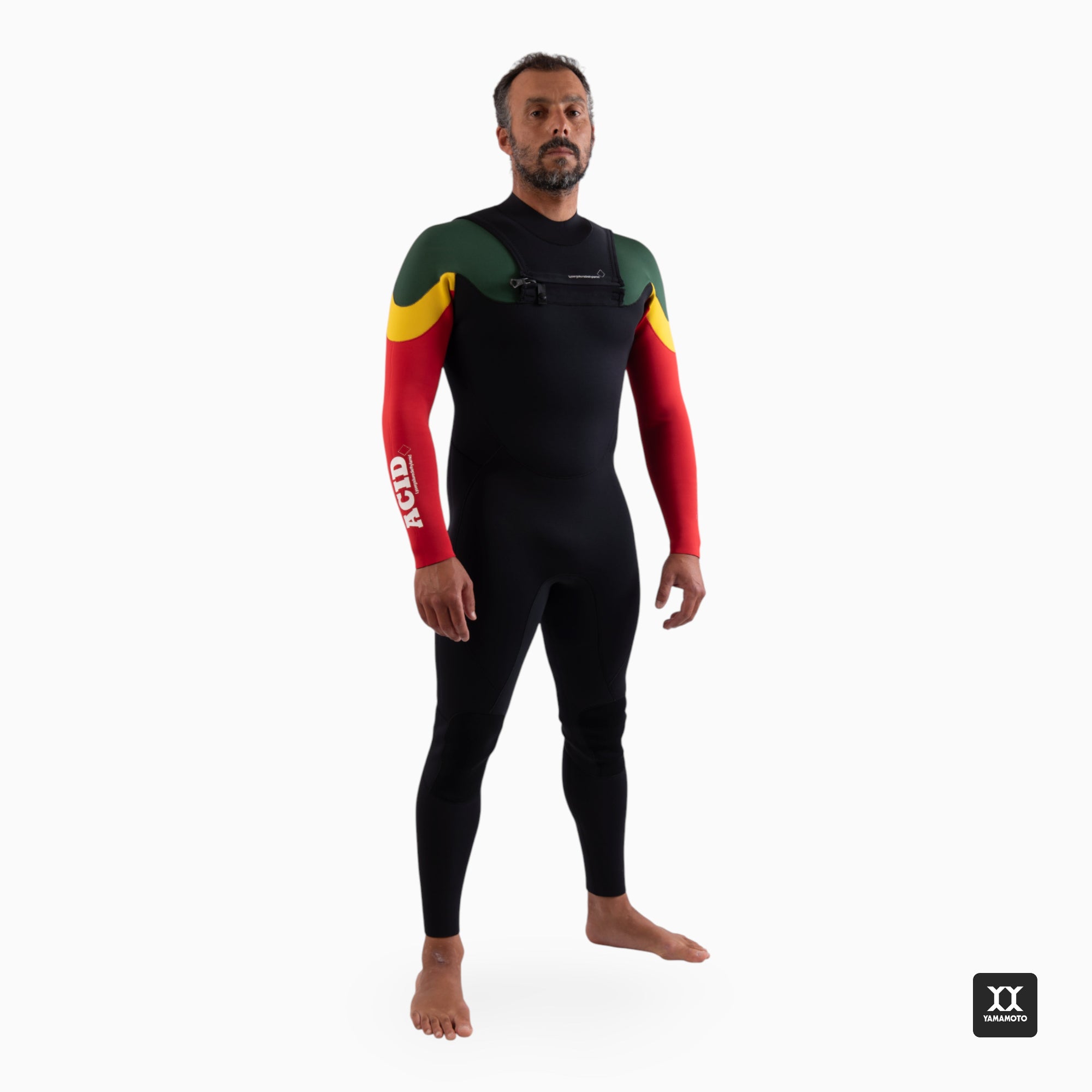


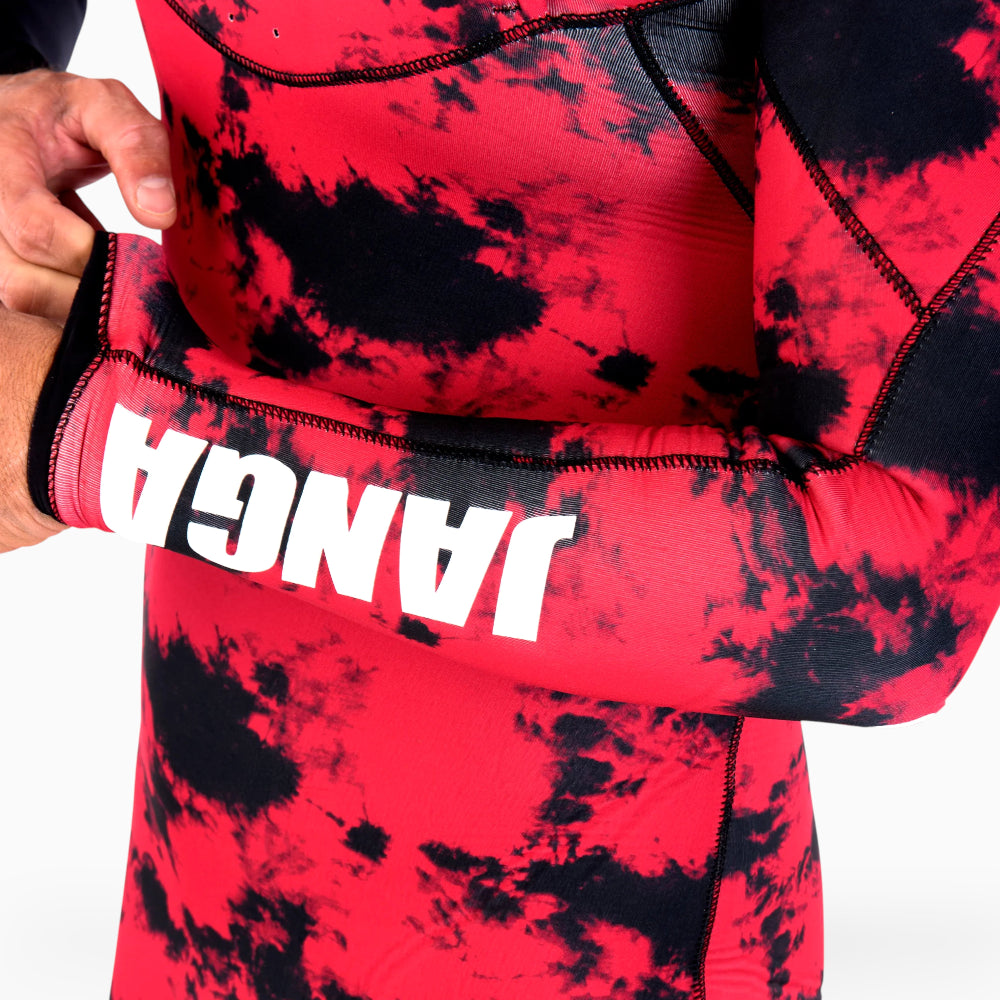


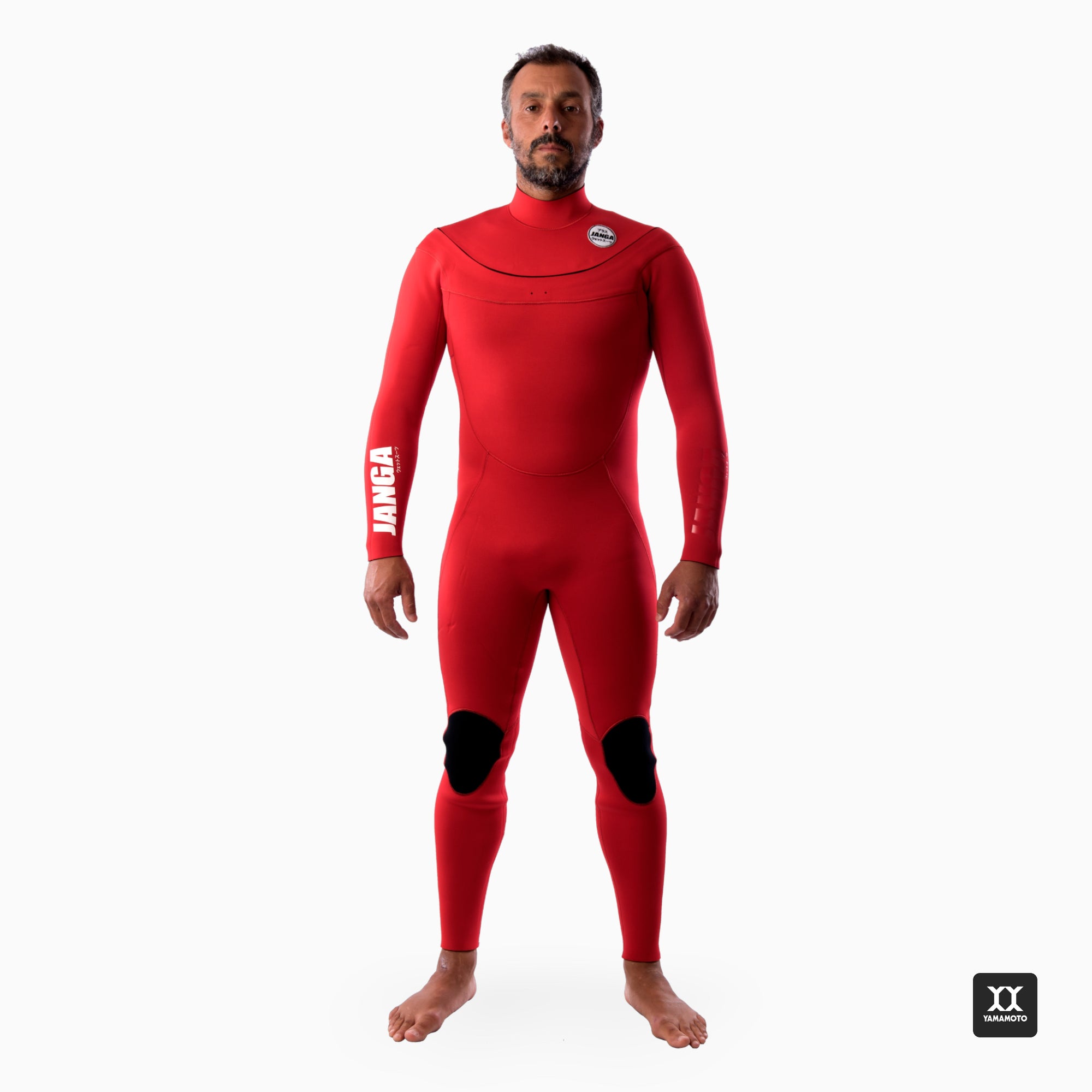
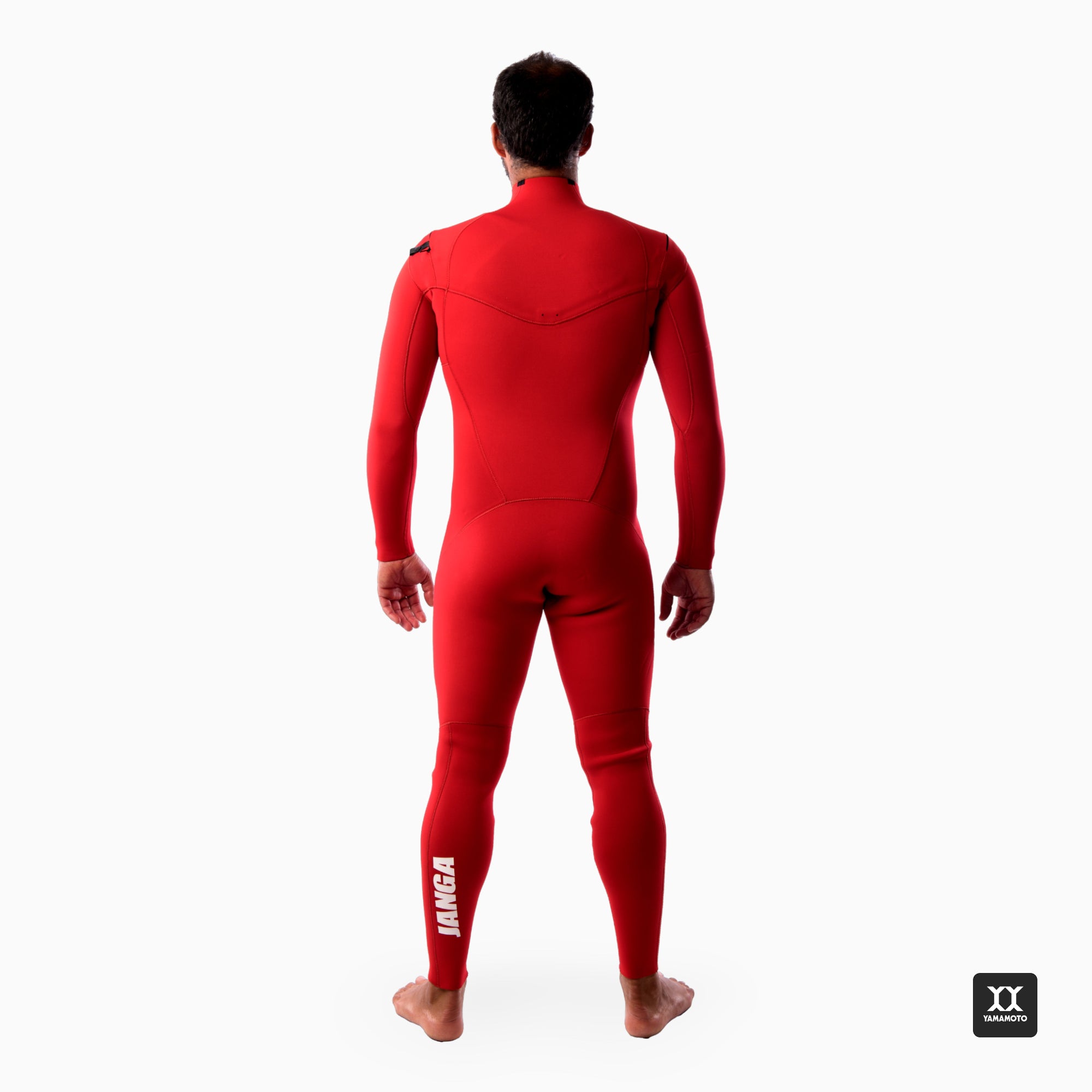
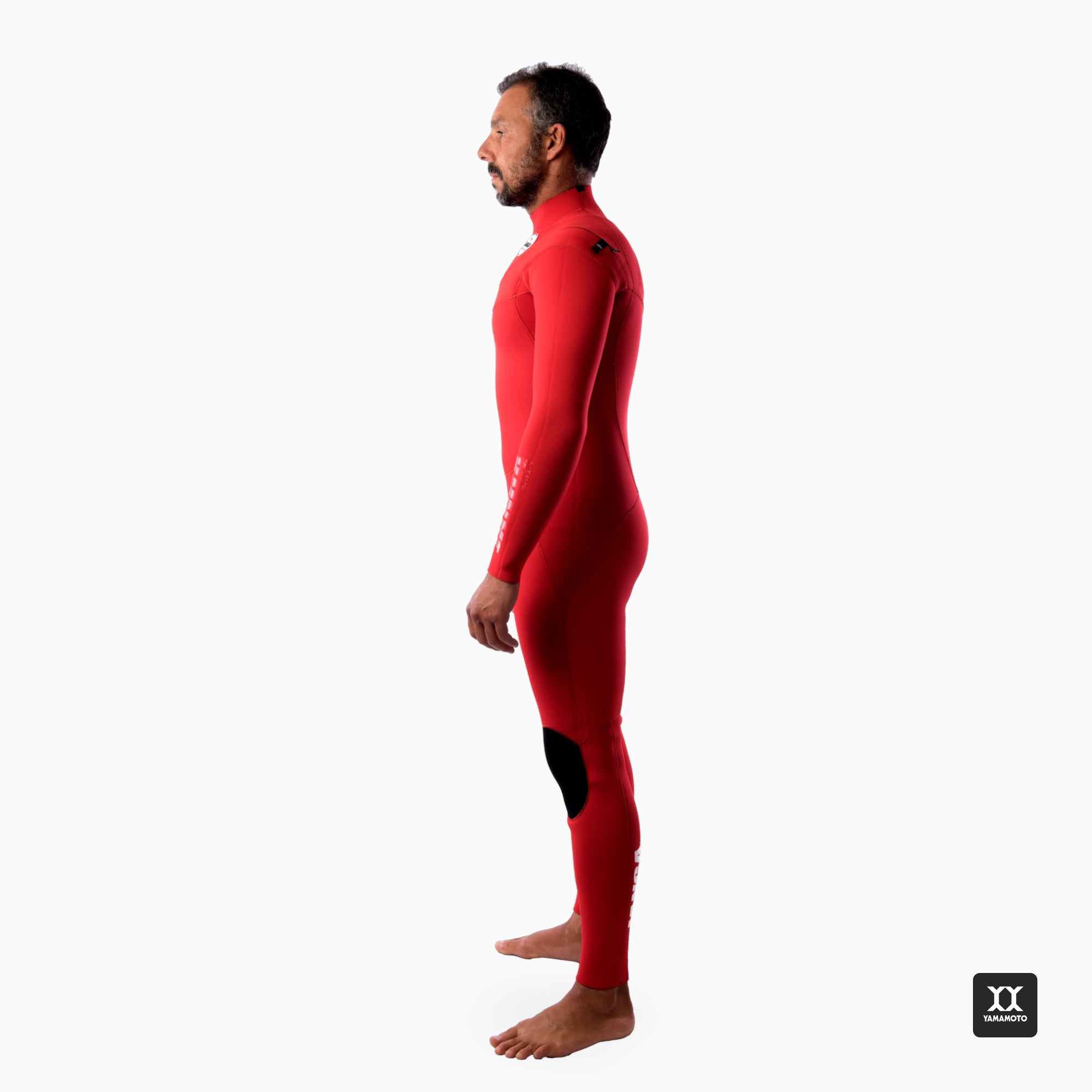
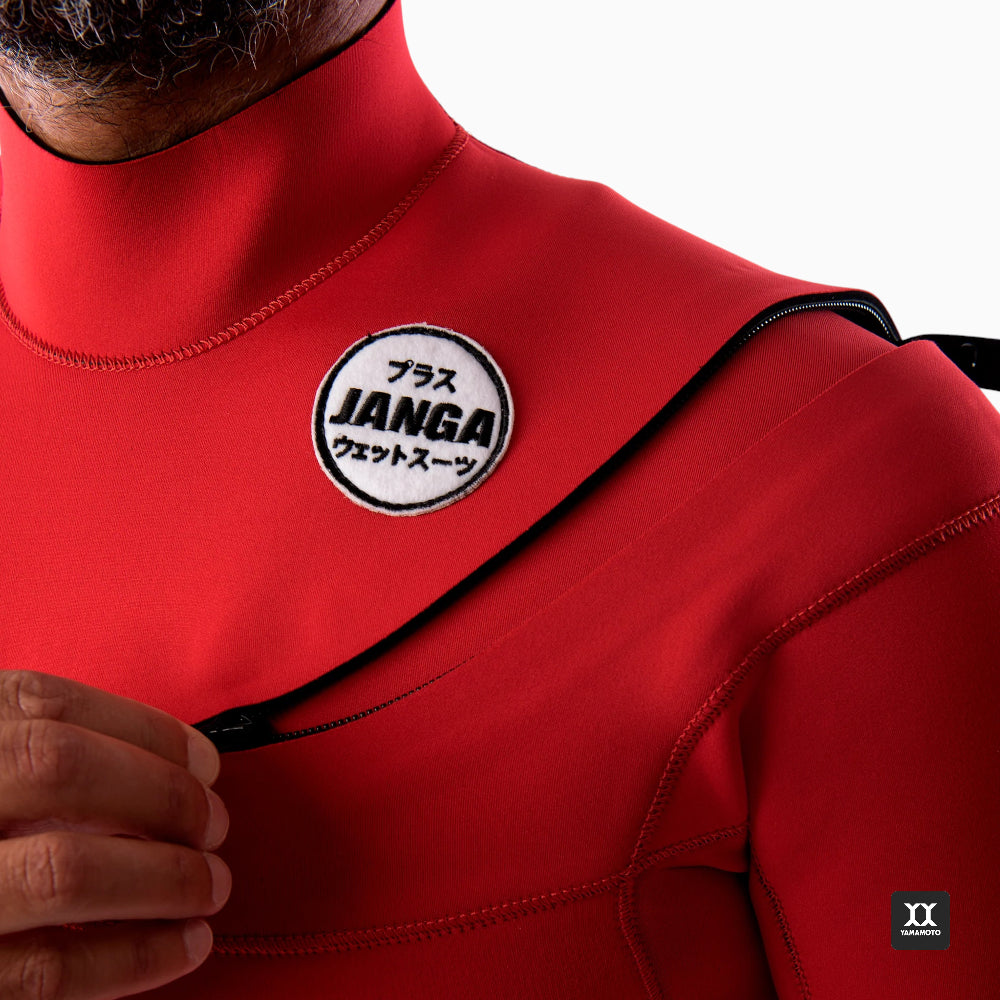
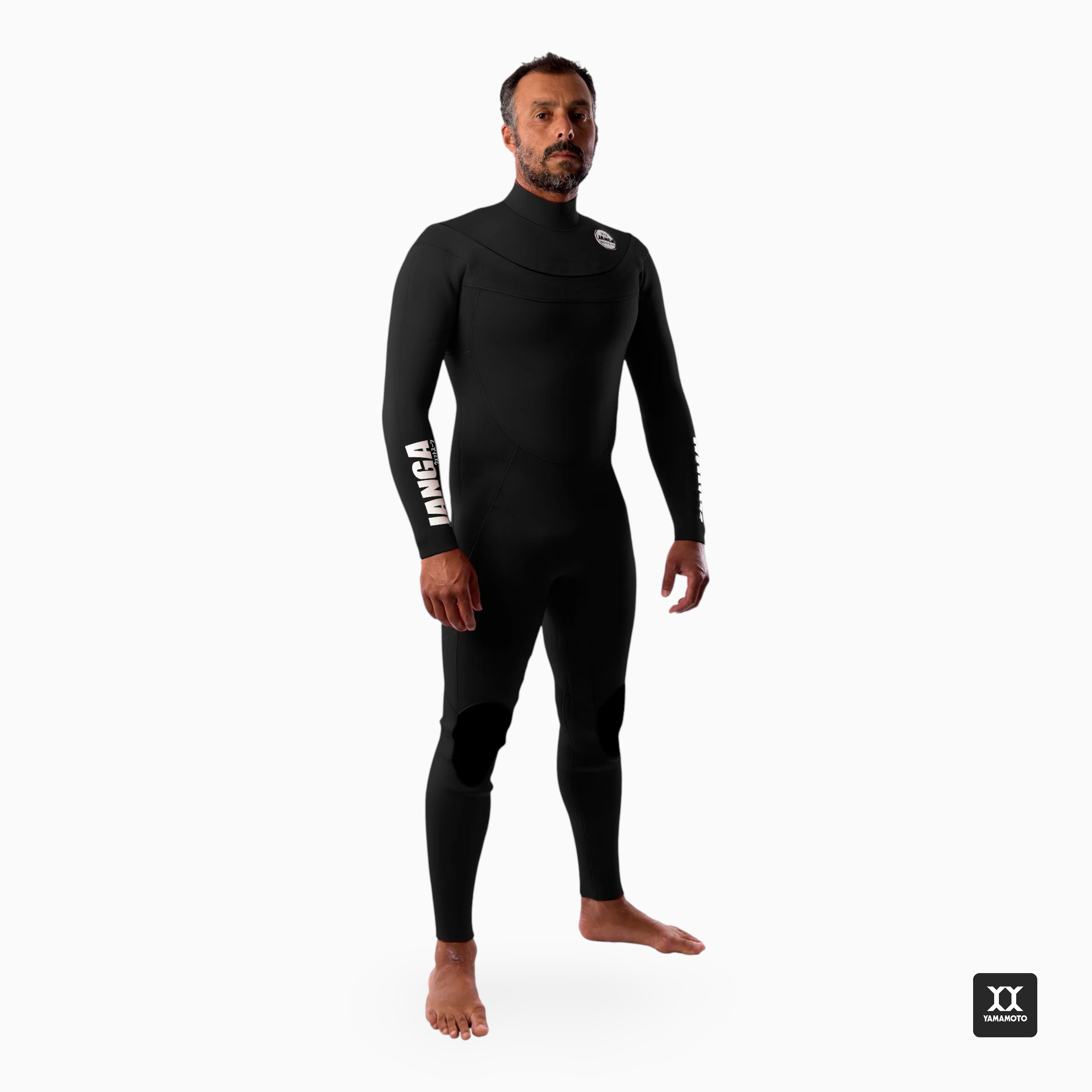
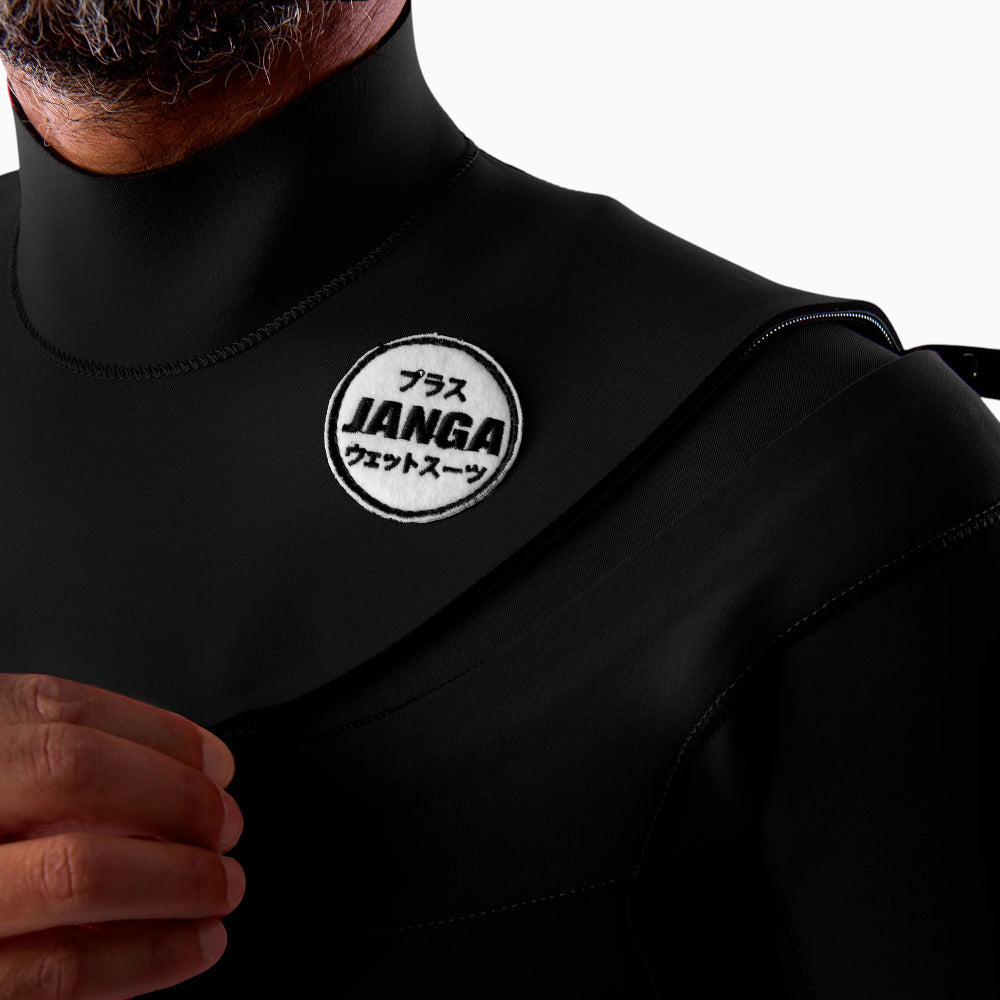
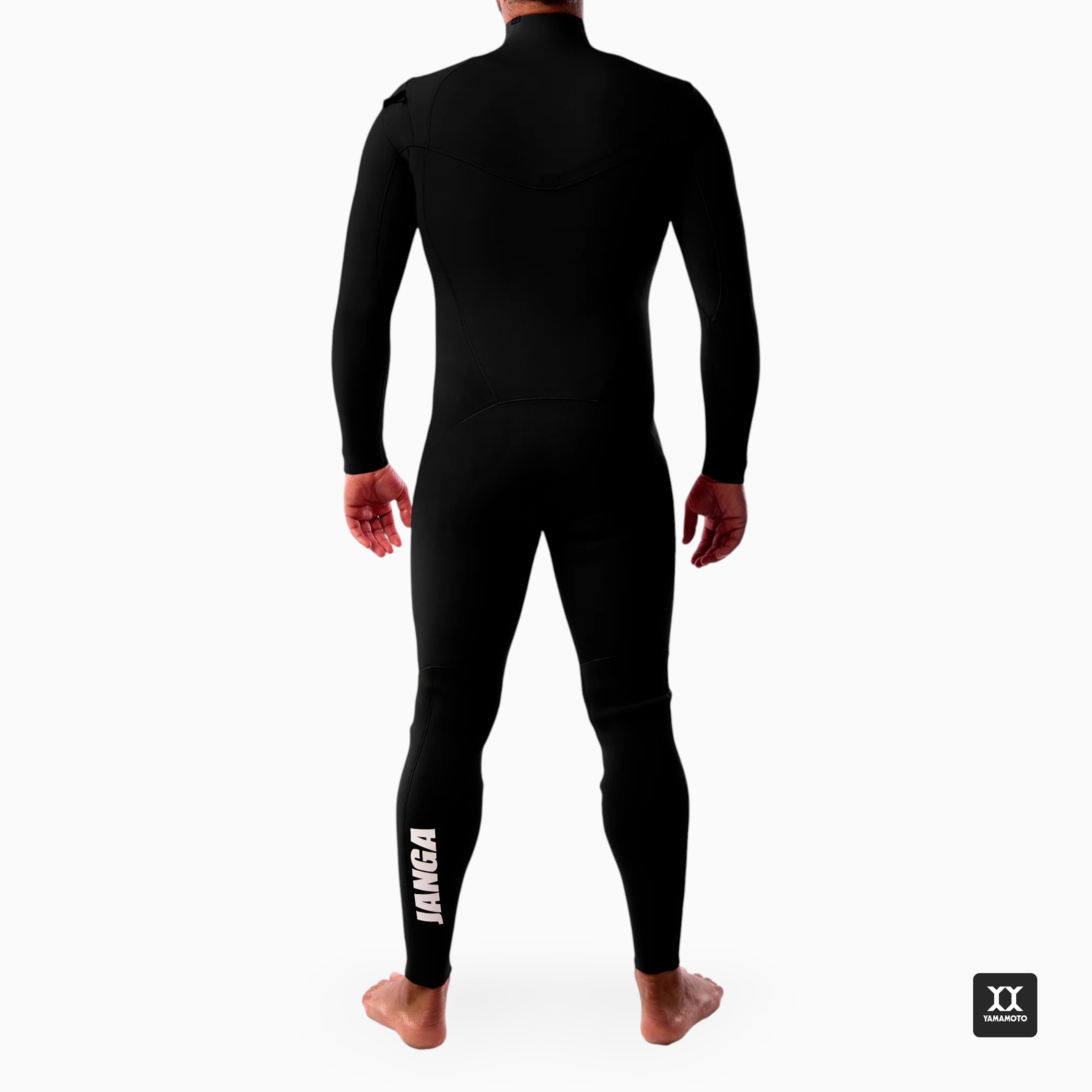
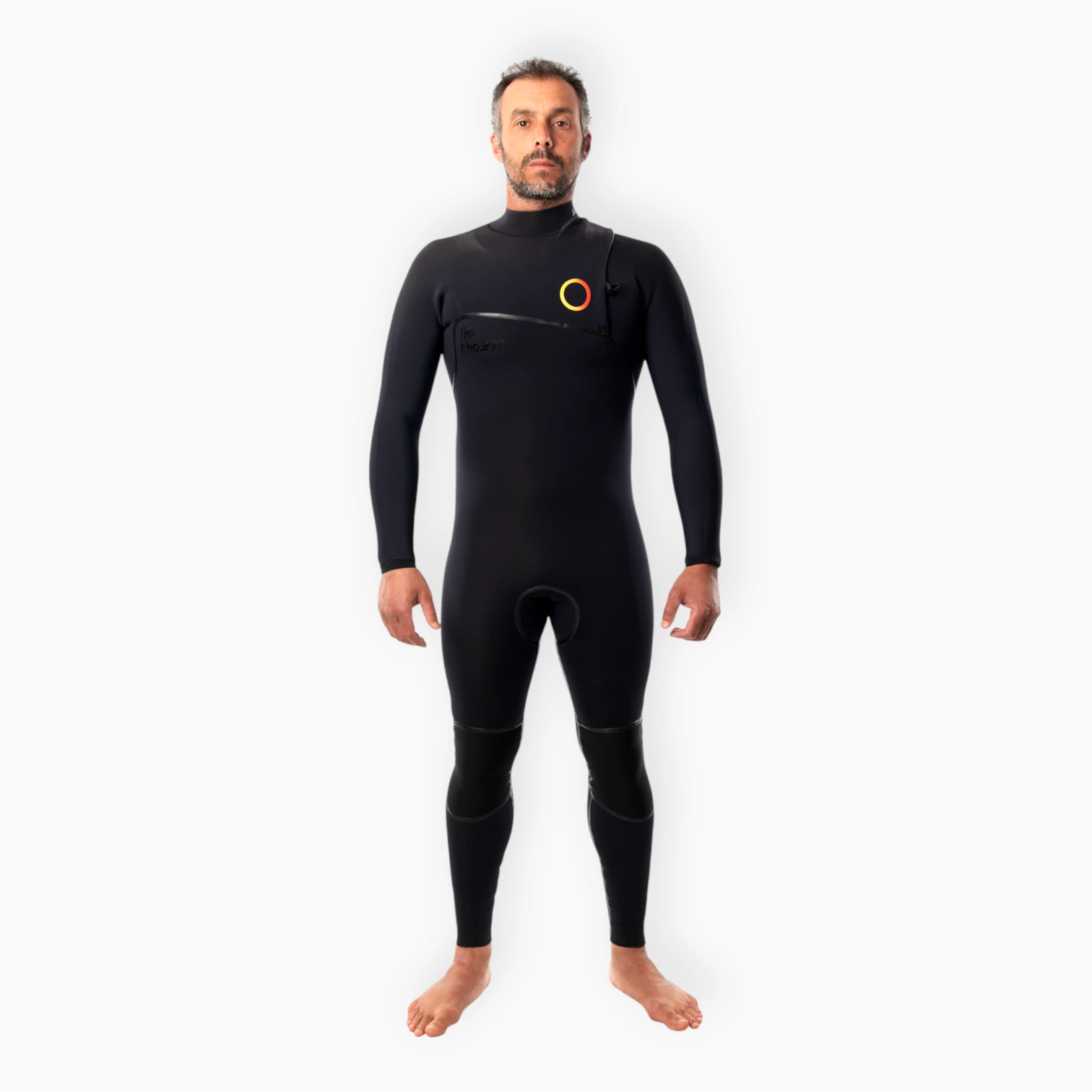
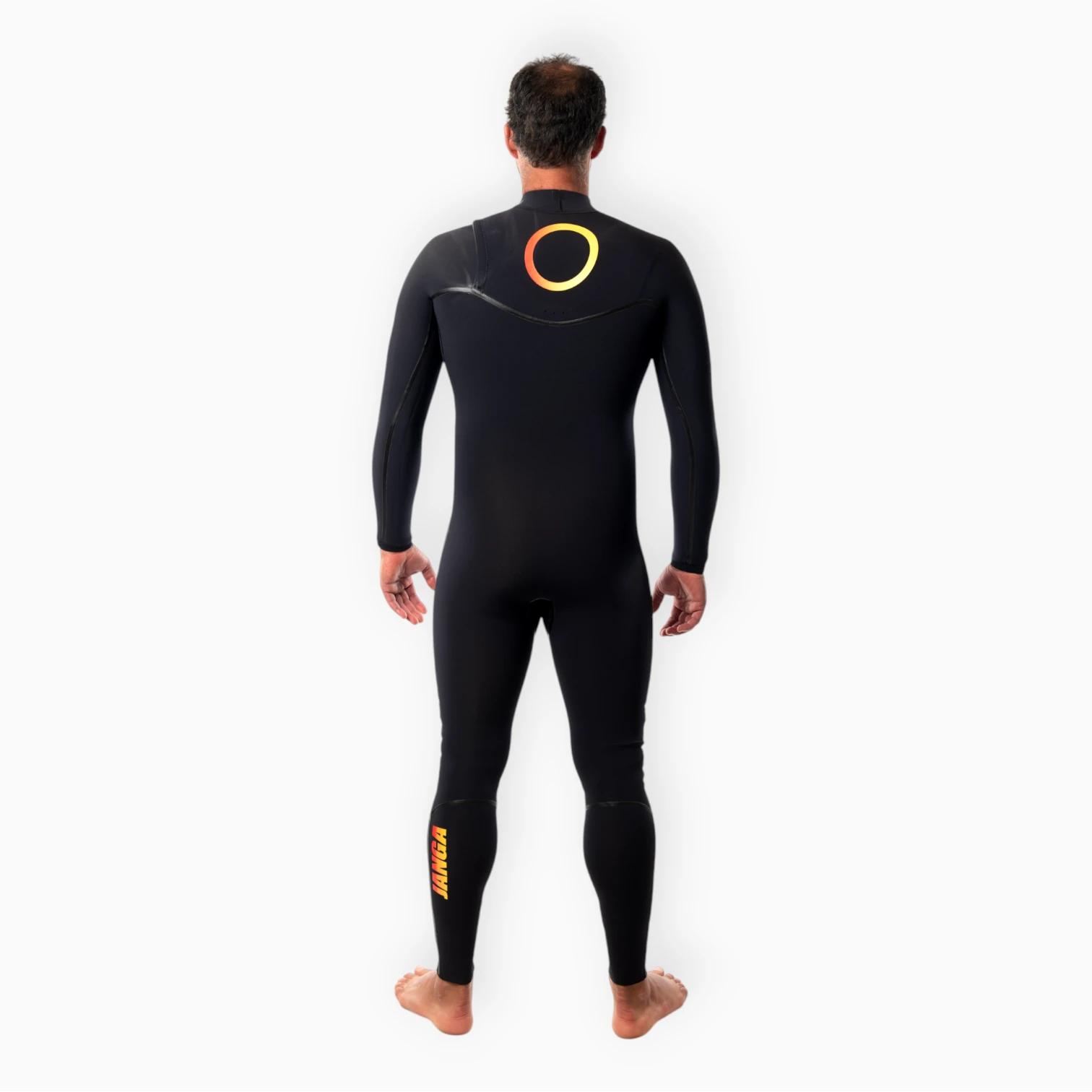
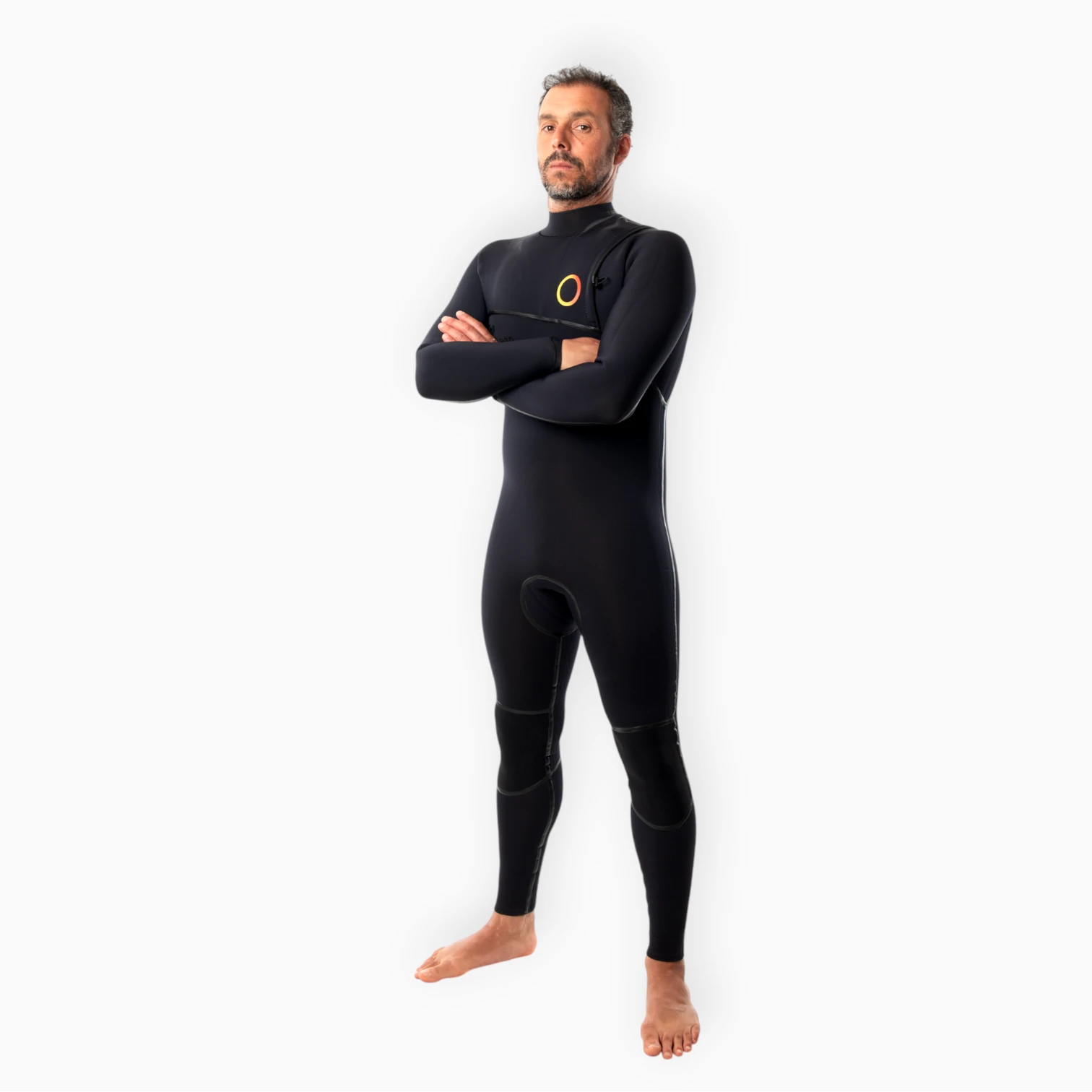
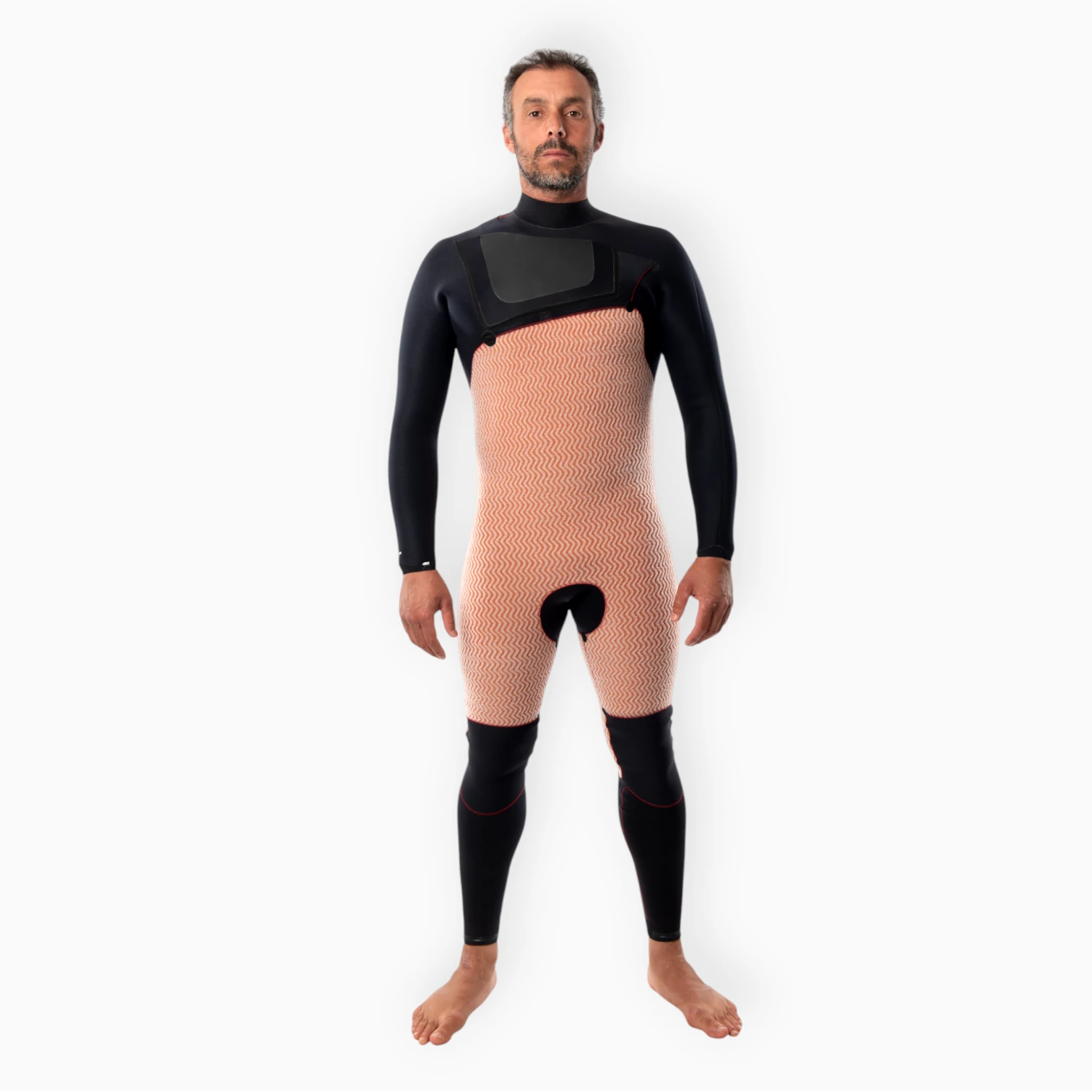




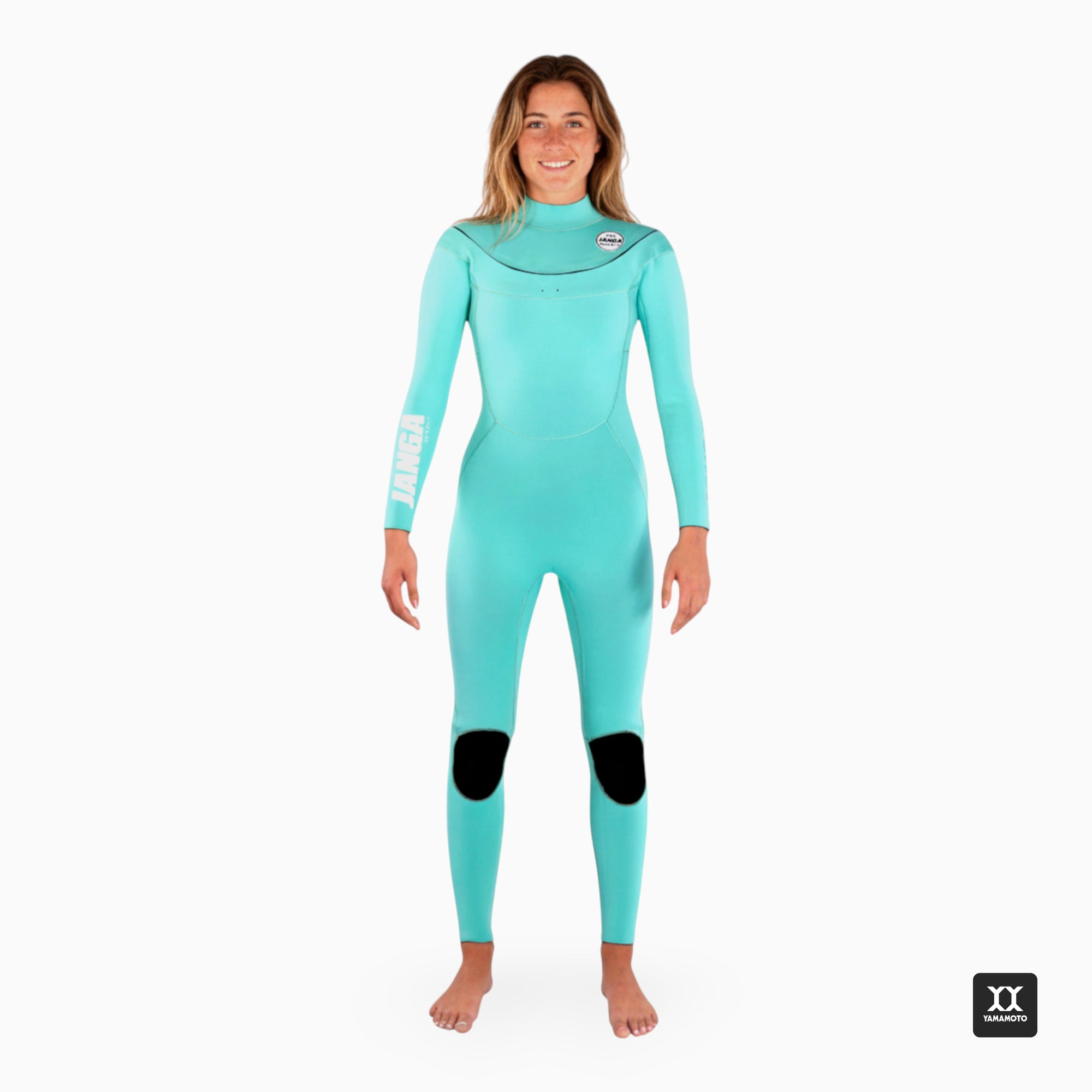
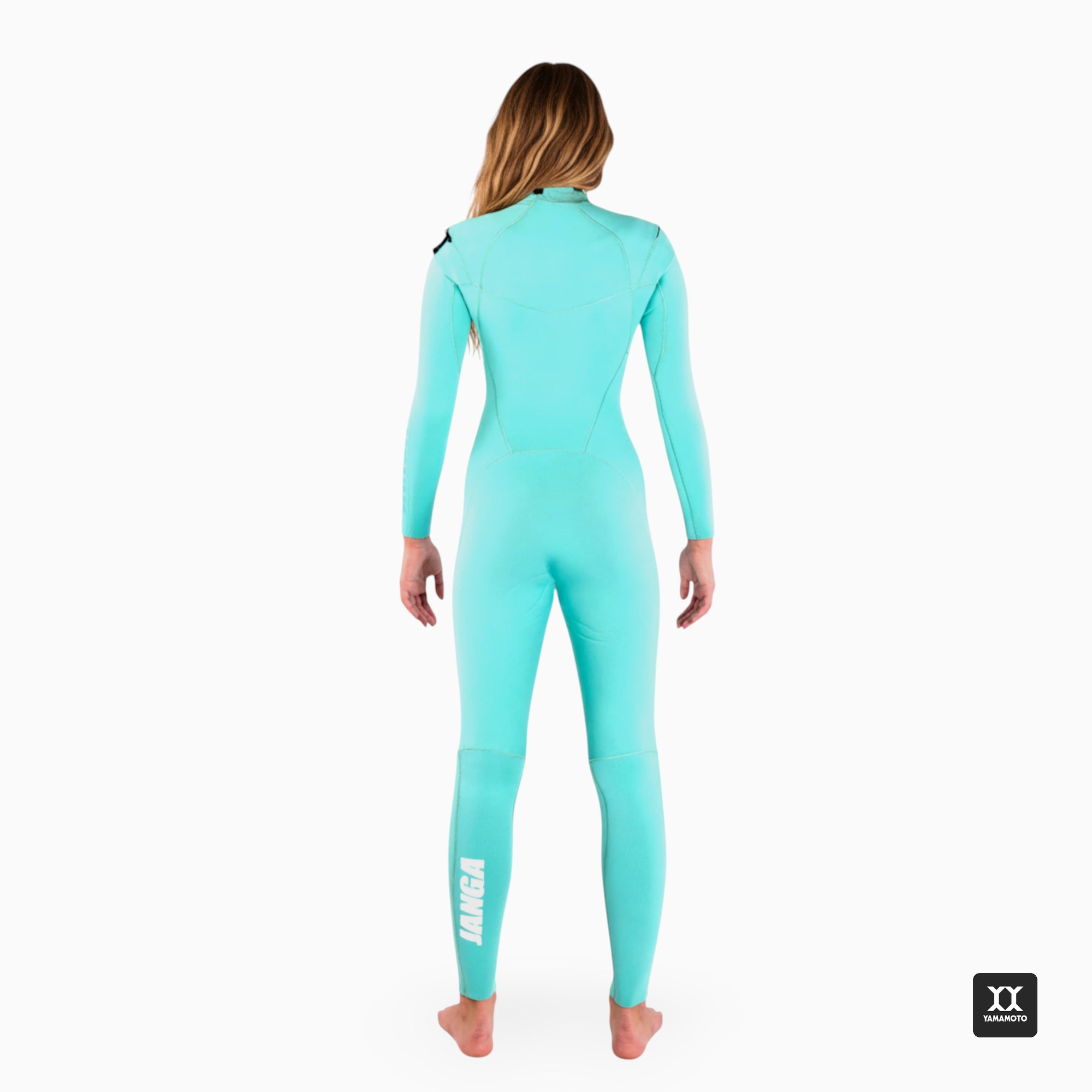
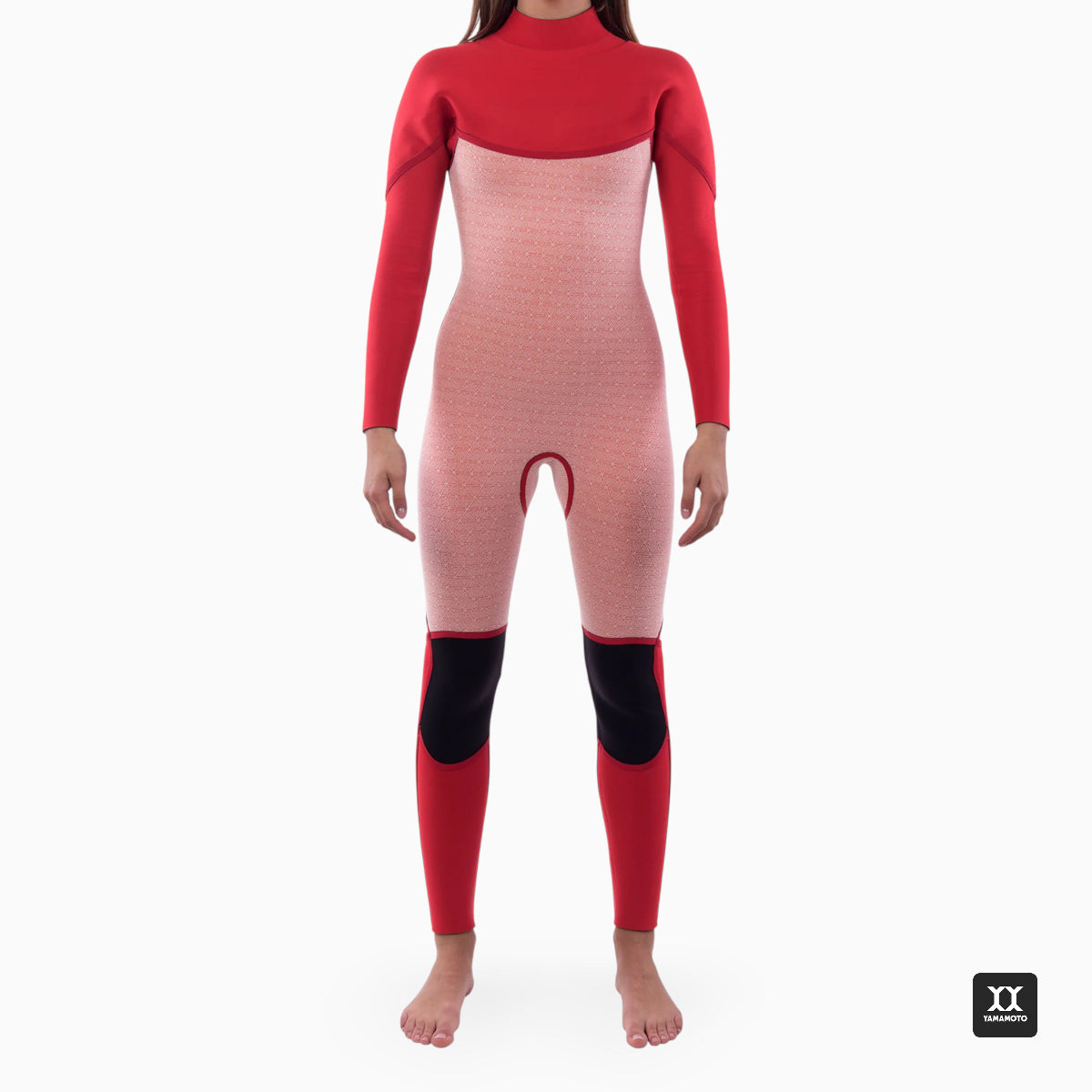

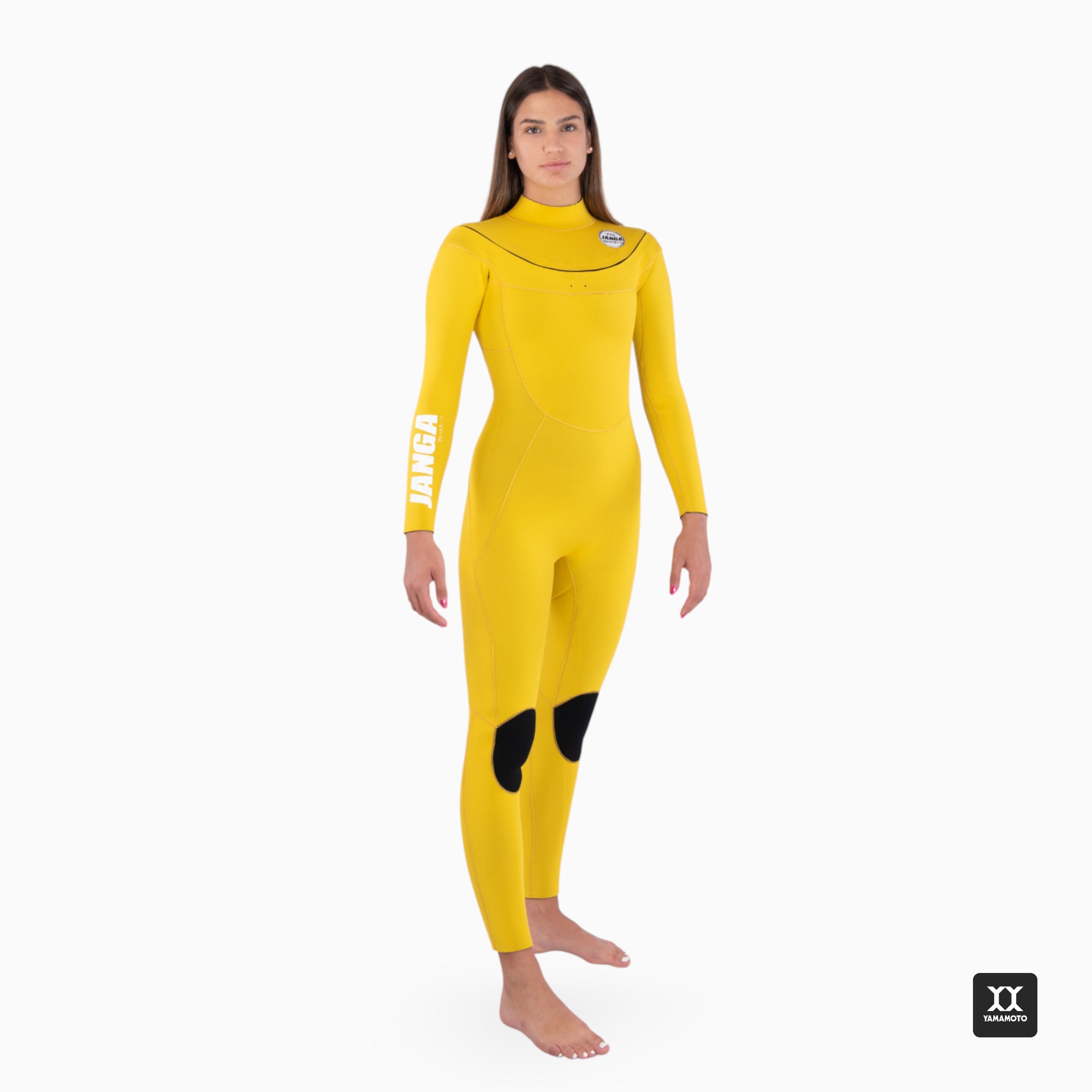
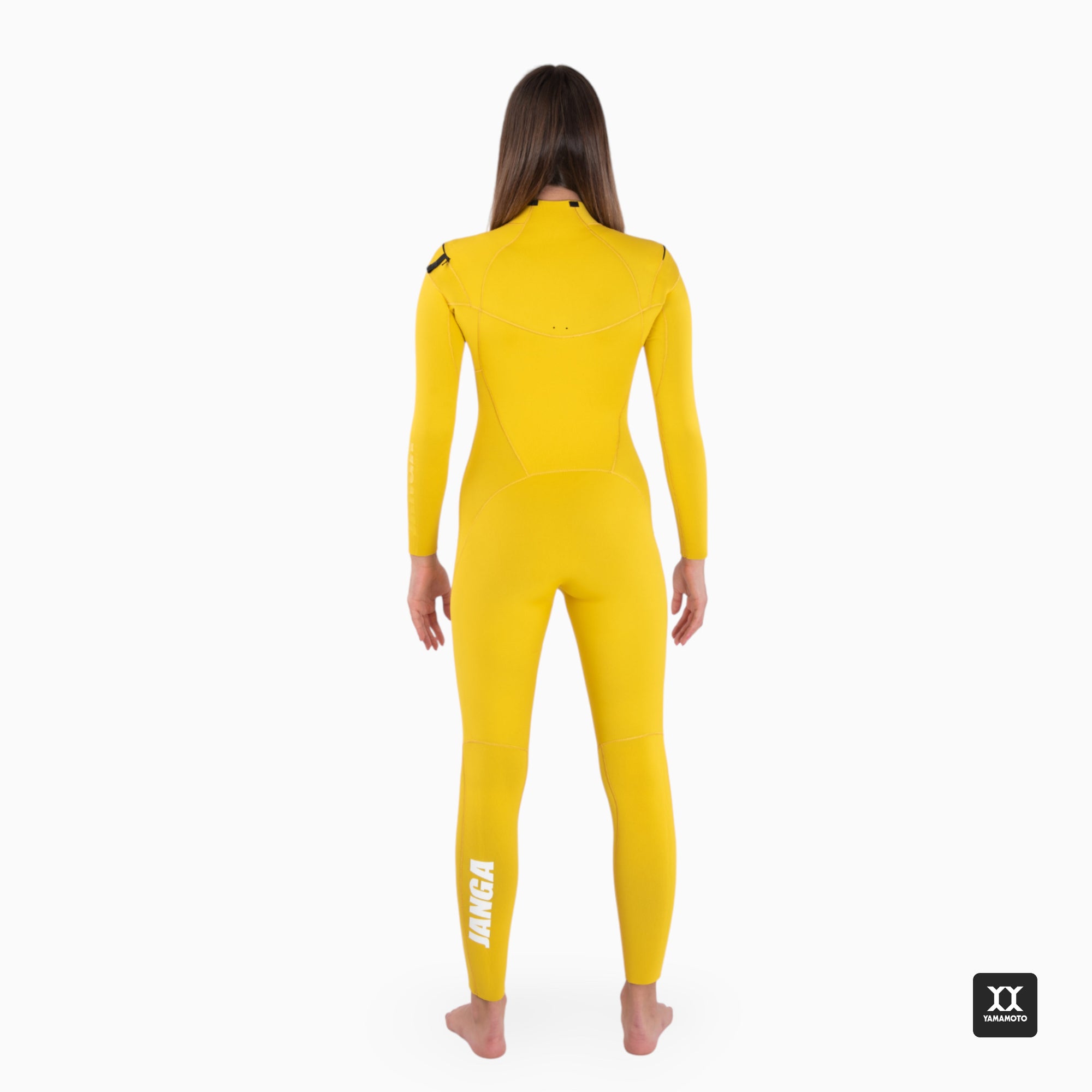
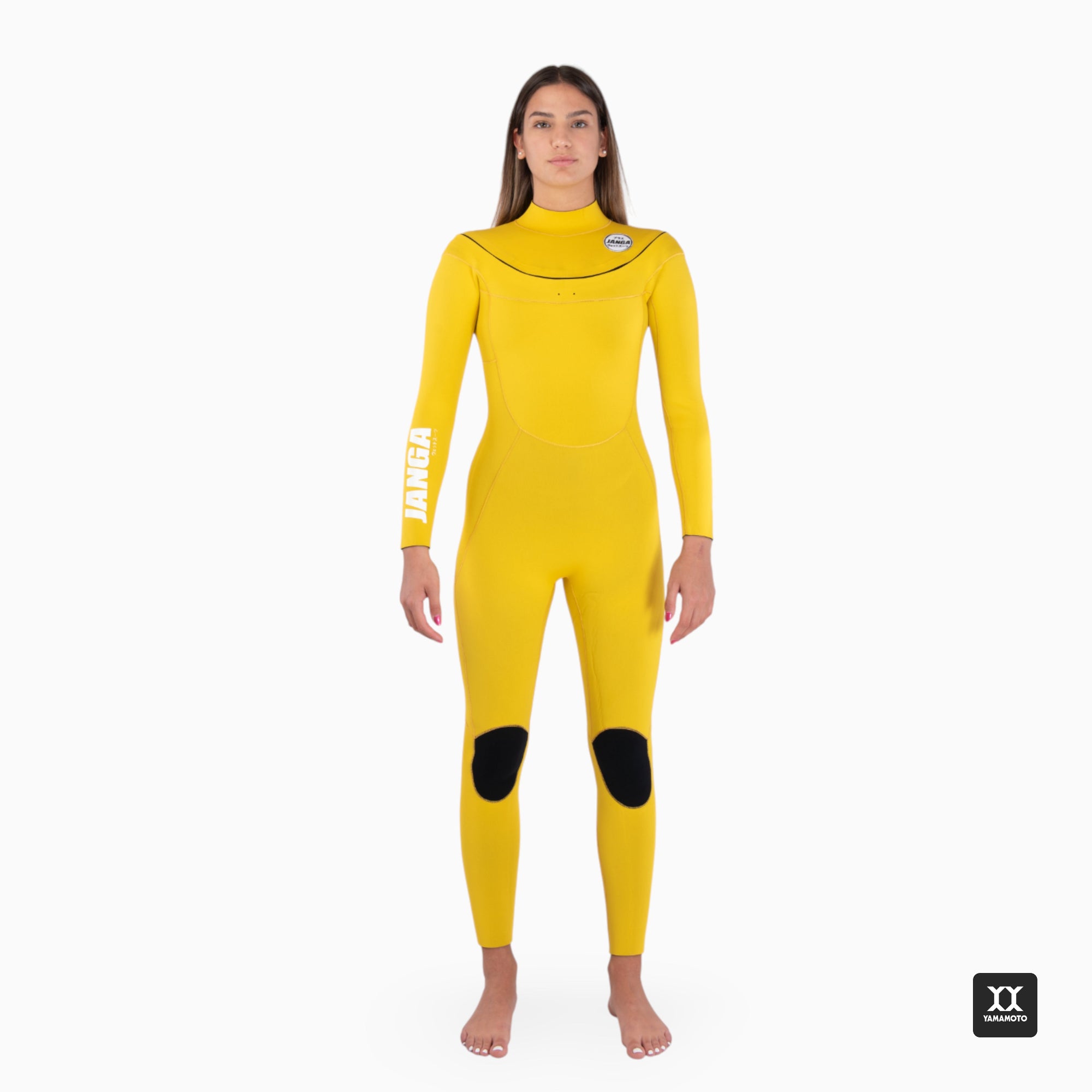
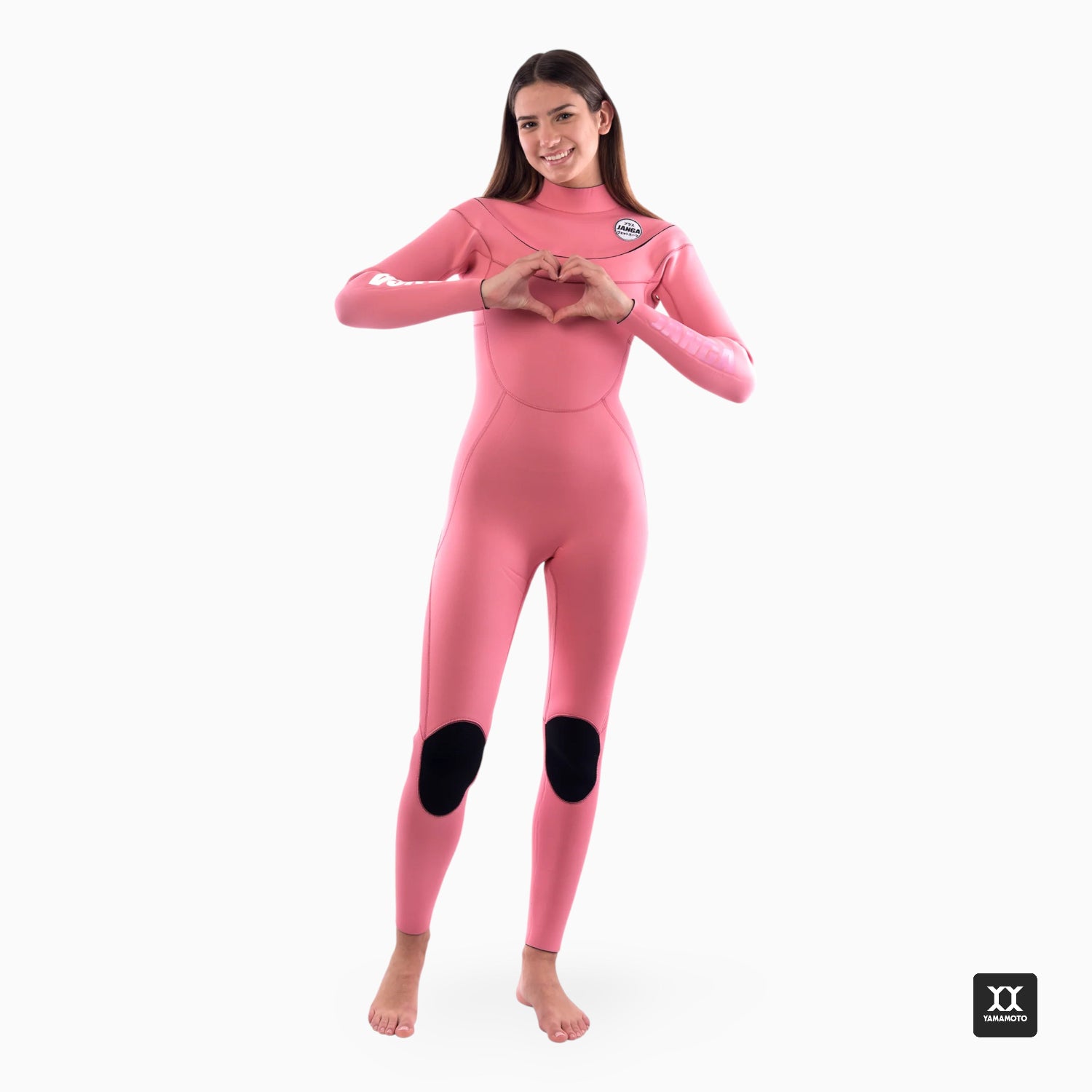
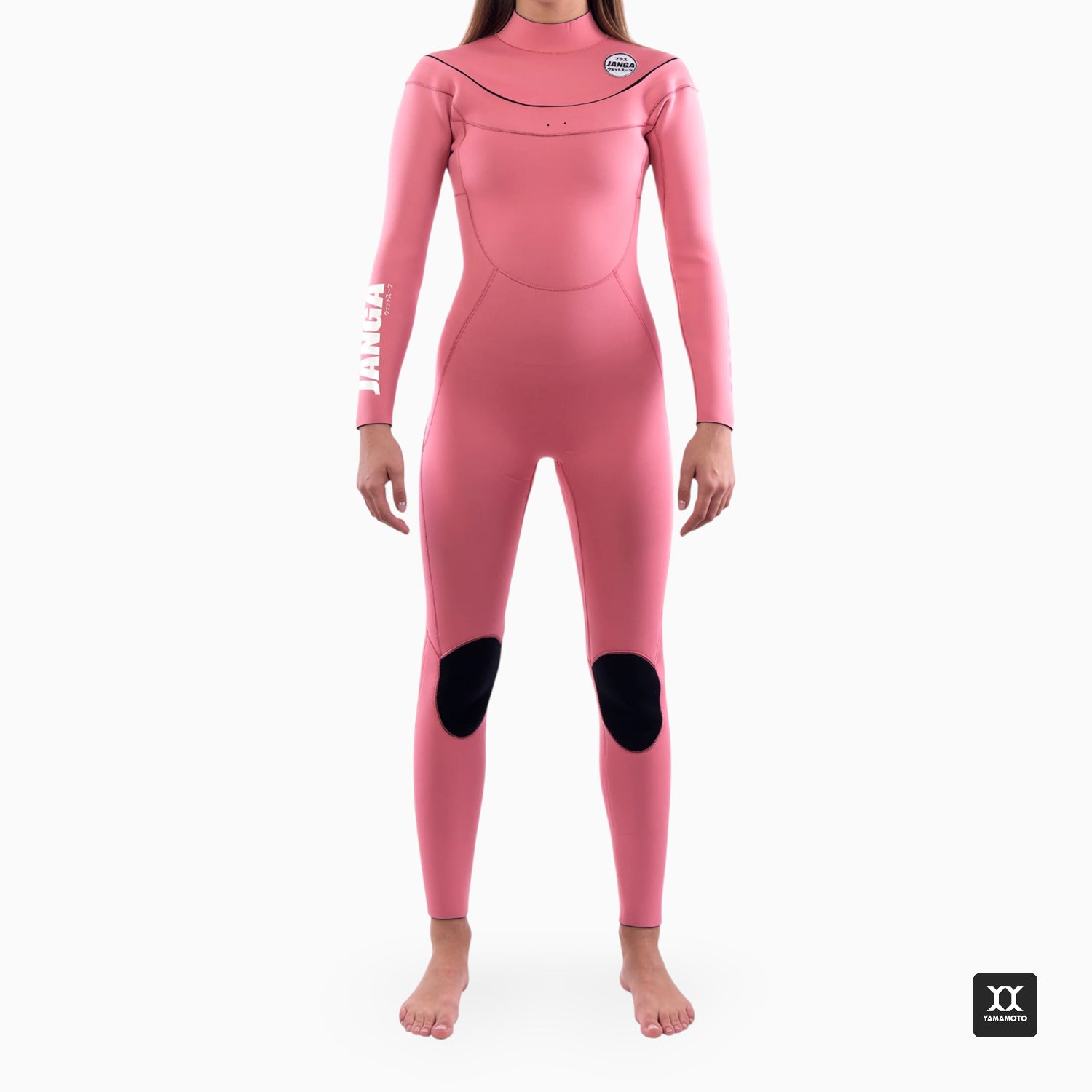
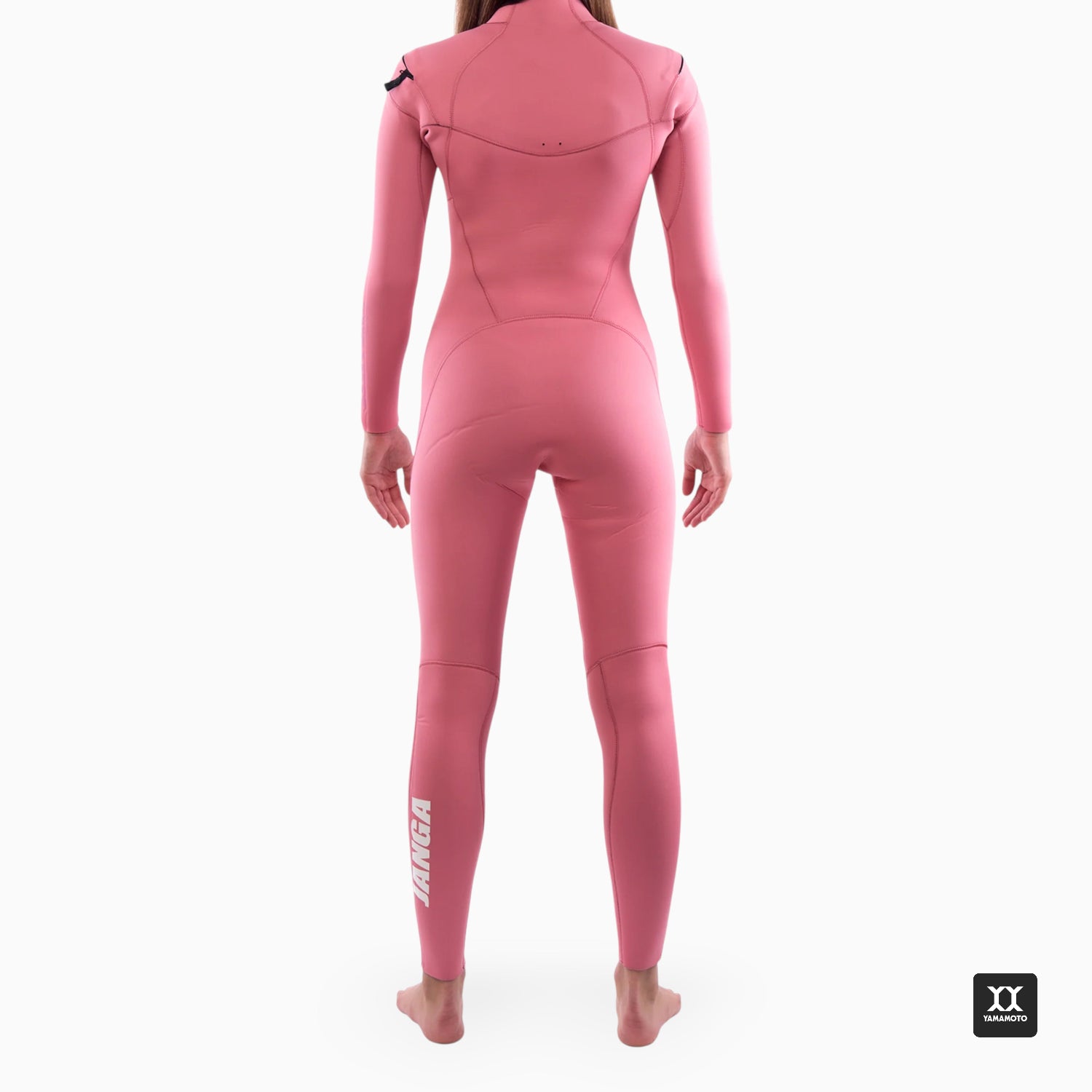
What is a 4/3mm Wetsuit?
When the water cools down and sessions get longer, a 4/3 wetsuit becomes your go-to. It's the suit you trust for early mornings, windy days, and cold paddles when quitting isn't an option.
A 4/3 full wetsuit uses two neoprene thicknesses to balance insulation and movement.
-
4mm neoprene in the core (chest, back, thighs)
Built to keep you warm where heat loss matters most. -
3mm in high-movement zones
Helps with paddle power and flexibility. - Strategic 2mm panels may be used in select areas for extra mobility.
Designed for real cold-water surfing, not just standing on the beach.
Every JANGA wetsuit is designed around warmth and flexibility, not bulk.
What temperature is a 4/3 full wetsuit for?
A 4/3 is ideal for cold water temperatures surf: 52–62°F / 11–17°C
Perfect for:
- Fall and winter in Southern California
- All year suit for Northern and central California
- Cold Atlantic sessions
- Windy mornings and overcast days
- Surfers who want added warmth without going full winter armor
If a 3/2 feels too cold and a hooded 5/4 feels like overkill — this is your zone.
Sizing and Fit Guide
A warm wetsuit that fits badly will still feel cold.
What to look for:
- Tight around the neck, lower back, and chest
- No bunching behind knees or elbows
- Comfortable breathing, no pressure points
Always check the size chart before ordering.
Your wetsuit size should feel tight when dry — water loosens it up fast.
Men’s Wetsuit Size Chart
| Imperial | Metric | |||
| Size | Height, ft-in | Weight, lbs | Height, cm | Weight, kg |
| XXS | 5'3" - 5'5" | 117 - 132 | 160 - 165 | 53 - 60 |
| XS | 5'5" - 5'7" | 126 - 141 | 165 - 170 | 57 - 64 |
| S | 5'7" - 5'9" | 135 - 150 | 170 - 175 | 61 - 68 |
| MS | 5'7" - 5'9" | 163 - 180 | 170 - 175 | 74 - 82 |
| M | 5'9" - 5'11" | 154 - 170 | 175 - 180 | 70 - 77 |
| ML | 5'10" - 6'0" | 163 - 180 | 177 - 182 | 74 - 82 |
| MT | 5'11" - 6'1" | 163 - 180 | 180 - 185 | 74 - 82 |
| L | 5'11" - 6'1" | 174 - 190 | 180 - 185 | 79 - 86 |
| XL | 6'0" - 6'2" | 190 - 205 | 183 - 188 | 86 - 93 |
| XXL | 6'1" - 6'3" | 205 - 221 | 186 - 191 | 93 - 100 |
Women’s Wetsuit Size Chart
| Imperial | Metric | |||
| Size | Height, ft-in | Weight, lbs | Height, cm | Weight, kg |
| 2 | 5'1" - 5'3" | 88 - 106 | 155 - 160 | 40 - 48 |
| 4 | 5'3" - 5'5" | 101 - 119 | 160 - 165 | 46 - 54 |
| 6 | 5'4" - 5'6" | 112 - 128 | 163 - 168 | 51 - 58 |
| 8 | 5'5" - 5'7" | 119 - 137 | 165 - 170 | 54 - 62 |
| 10 | 5'6" - 5'8" | 130 - 150 | 168 - 173 | 59 - 68 |
| 12 | 5'7" - 5'9" | 141 - 161 | 170 - 175 | 64 - 73 |
JANGA suits are cut for real surfers, not mannequins. If you're between sizes or built differently, custom tailored fit is always an option.
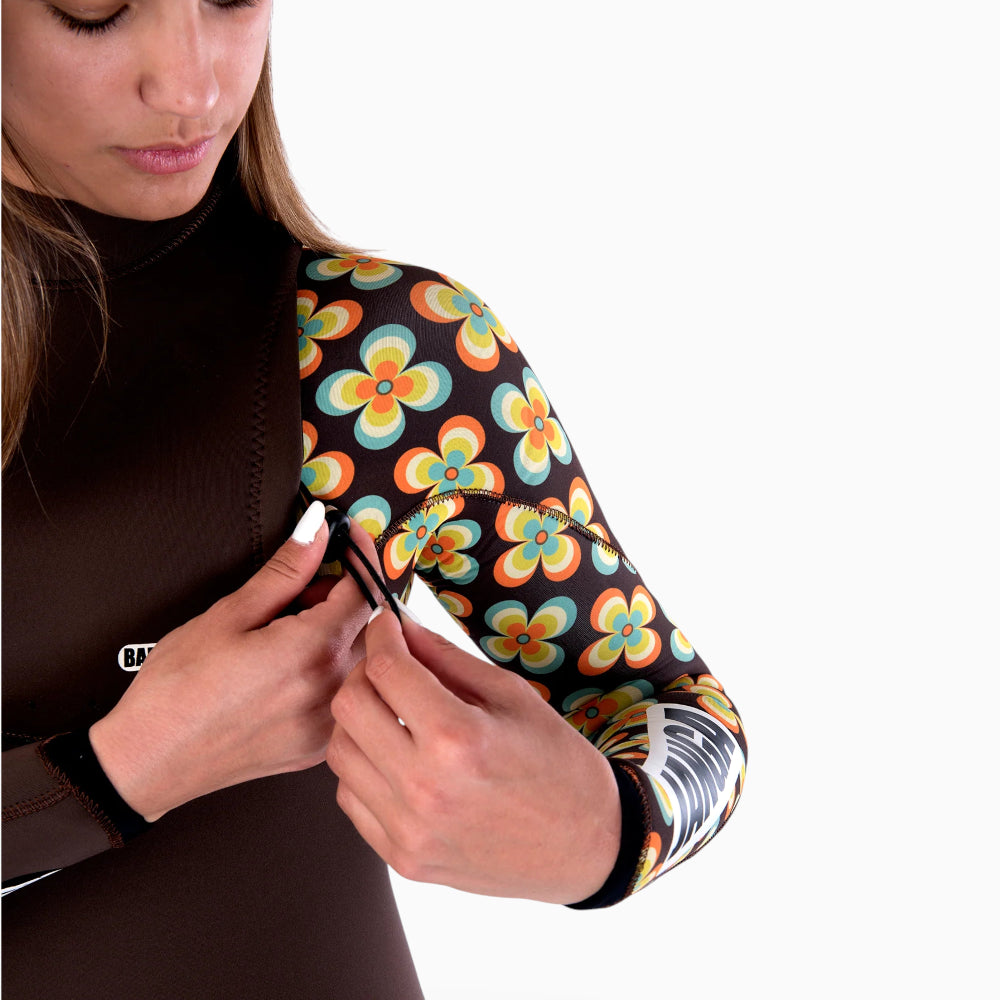
What zip gives more warmth & flexibility: chest zip, back-zip or no zip?
Back zip wetsuit
- Wide opening, easiest to get on and off
- Slightly more water entry
- Best for beginner surfers, kids and quick changes (schools / rentals)
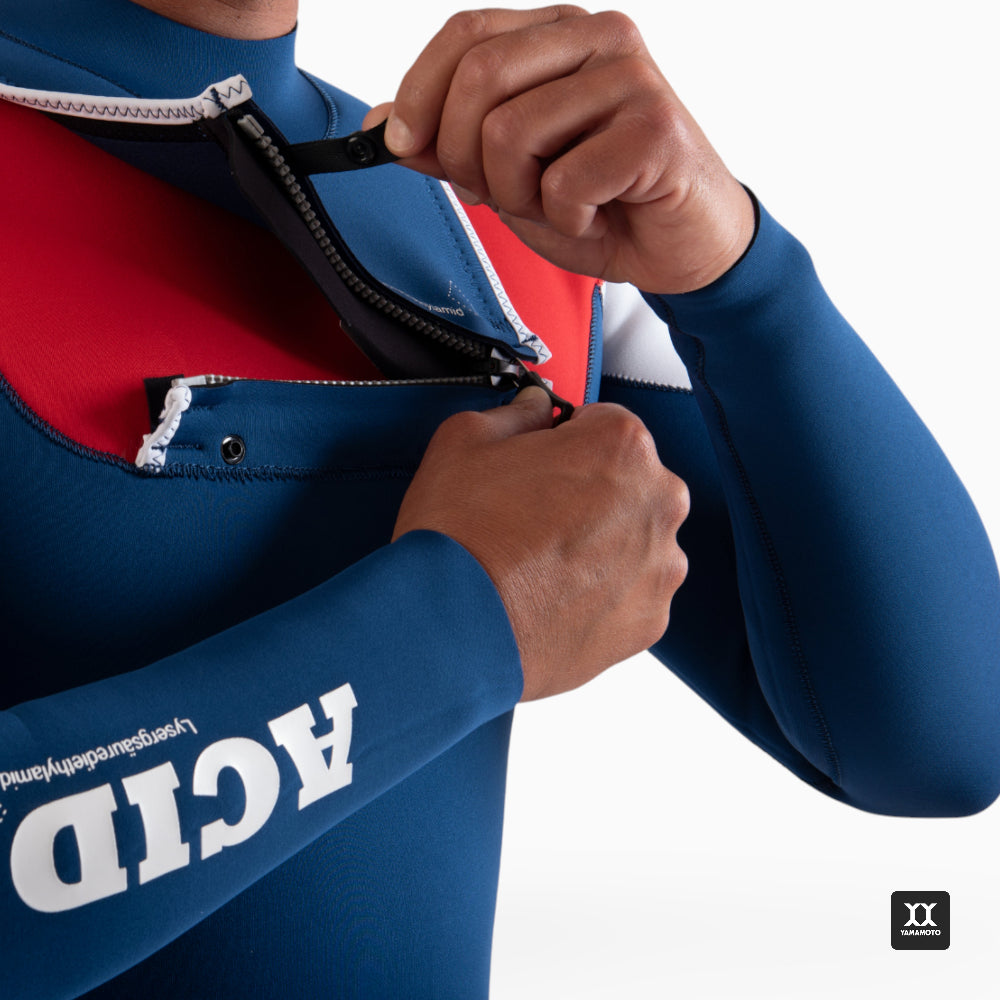
Chest zip wetsuit
- Better seal, less flushing
- More freedom of movement
- The most popular zipper style among surfers
Front zip / zip-free designs
- Minimal water entry
- Super stretch and comfort
- A true high-performance option
Once you get used to a chest zip wetsuit, it's hard to go back.
Neoprene types
Not all neoprene is equal.
JANGA wetsuits are made from limestone based neoprene, not petroleum foam.
Why it matters:
- Softer and more stretchy
- Better natural insulation
- Warmer with less thickness
- Longer lifespan and better recovery
For our cold water suits we often add thermal lining or fever fiber inside for extra heat retention without bulk.
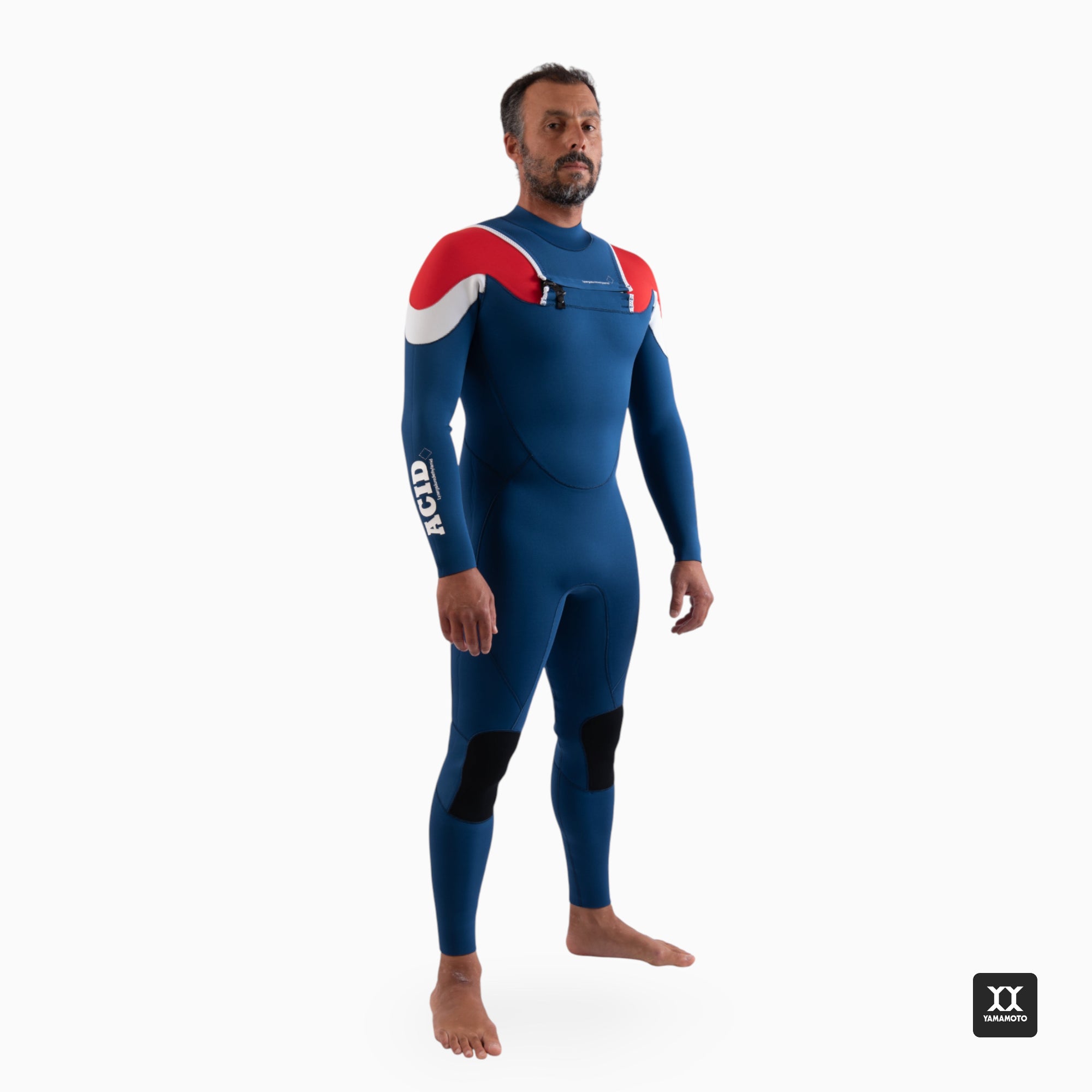
Premium wetsuits are made from Japanese Yamamoto limestone neoprene.
Yamamoto is lighter, denser, and more consistent than standard neoprene. It traps heat more efficiently, absorbs less water, and stays flexible over time — even after heavy use.
Seam Construction Types
Seams are the difference between "warm enough" and "done after 40 minutes."
Flatlock seams
- Best for milder cold conditions
- Flexible and highly durable
- Allows some water to pass through
- Usually not used in 4/3mm wetsuits
- Perfect for surf schools, rentals, and kids' wetsuits thanks to their toughness and long lifespan
GBS seams
- Glued and blind stitched (GBS)
- Much better water resistance
- A strong balance of flexibility and warmth
Taped seams
- Sealed and reinforced from the inside
- Maximum durability and heat retention
- Ideal for cold, long sessions
Most premium 4/3 suits combine GBS with taped seams in key zones.
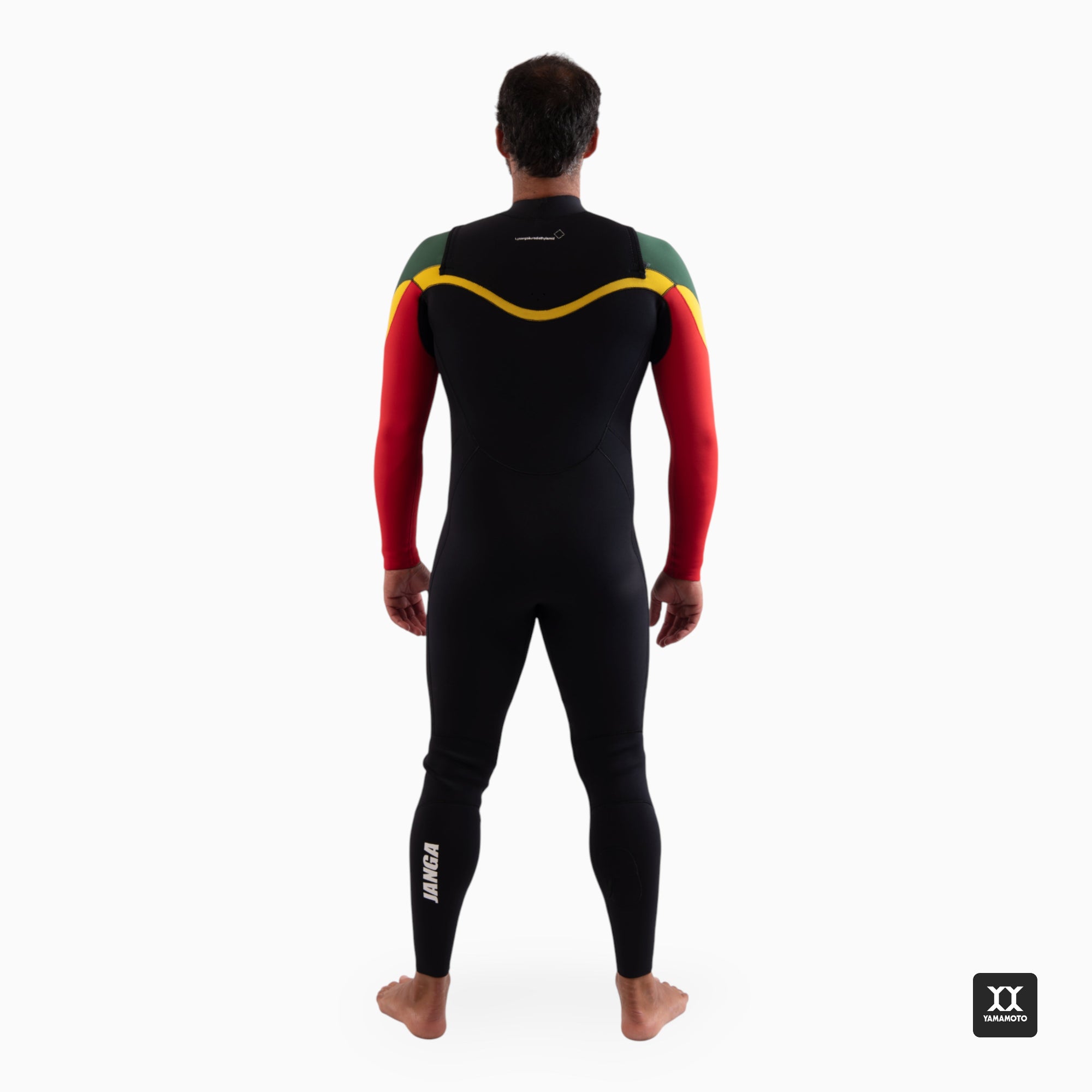
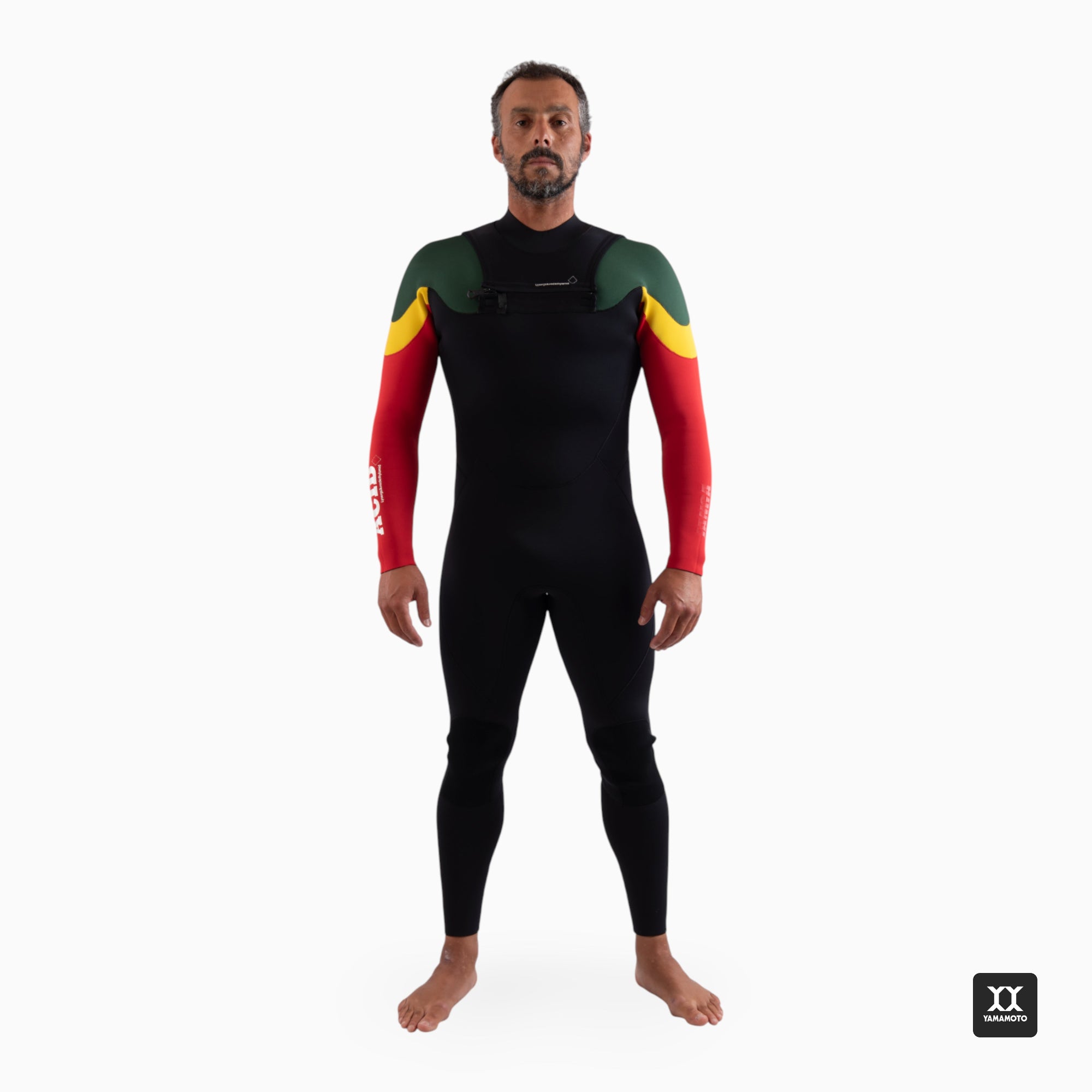
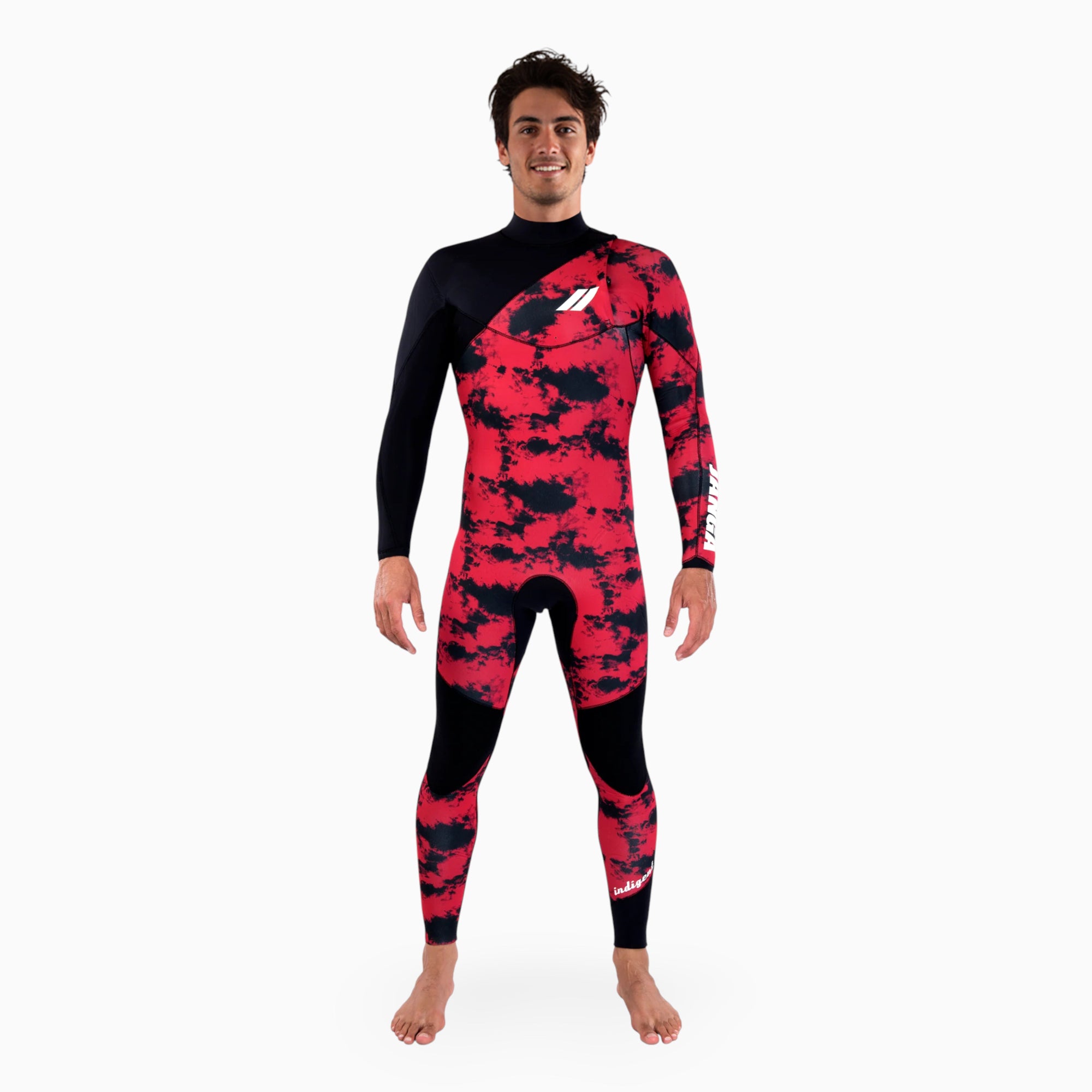
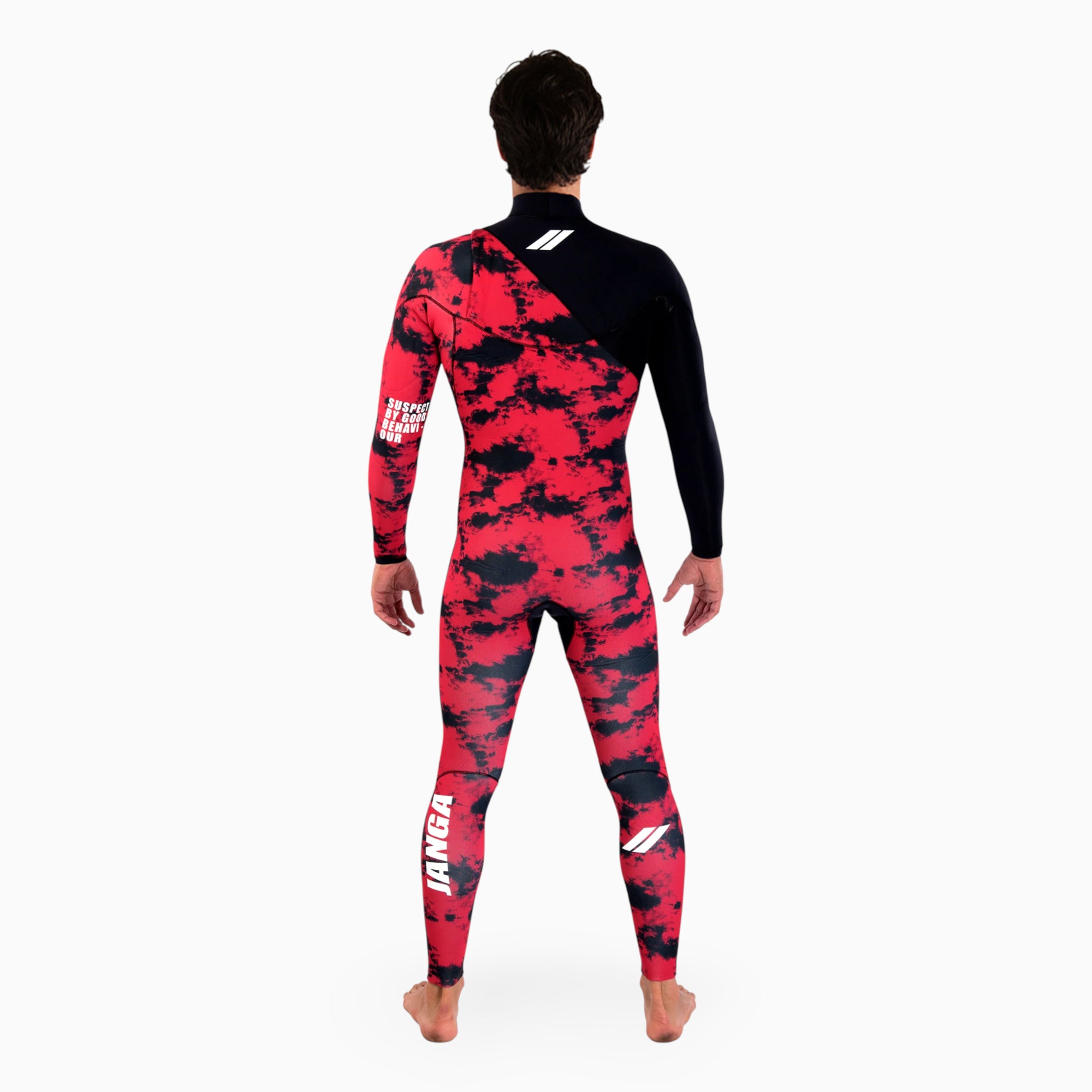
Our favorite 4/3 wetsuits
Real surf testing — not lab guesses